Tag Archives: folk

2013…The Year of the Fan!

9410022308_4416d1b7bd_o

With 2013 coming to a close, it’s time to reflect on another spectacular year of music.  Live music pulled me to many different corners of our beautiful United States.  From Rhode Island’s Newport Harbor to Colorado’s Red Rocks and everywhere in between, I’ve been lifted up by the music and the many friends and fans I’ve met along the way.

I know 2014 will bring many new musical experiences–already have 5 concerts on the books so far–however, I’d like to take this opportunity to share my 2013 Top 10 EOAF Moments:

10. Watching Jay-Z and JT somehow get a sold-out Fenway Park to sing along to “Empire State of Mind” with little to no resistance, might I add.  Perhaps all it takes is these two powerhouse performers to dissolve decades of hatred between Bostonians and New Yorkers.  Not too sure New Yorkers would have done the same if roles were reversed!

9. Filling our home with the imperfect but impeccable sounds of vinyl, and the constant chase to find my next favorite record at the thrift shop…oh and my first Record Store Day, too!

record

8. Being one of 200 people at MerleFest who got to listen to Wayne Henderson tell the story about the first guitar he ever made.  That sweet, humble man seriously blew my mind.

7. Experiencing my first live Bob Dylan performance.  Even though I could barely understand him, I knew I was in the presence of folk greatness!

6. Being a part of this wonderful “Thank You” project…

5. Stumbling upon the surprise songwriters session at Newport Folk Festival and spending the morning listening to Langhorne Slim and Scott and Seth Avett play and answer questions from a small audience (capped off by a Jim James eyes closed staring contest).

LANGHORNE

4. Experiencing The Avett Brothers’ performance of “Complainte D’Un Matelot Mourant” at Red Rocks Night 1 — to try to describe the ghostly wind that blew down through the rock amphitheater to the stage would be impossible.  Even the video doesn’t do it justice.

3. Being one day late from experiencing The Milk Carton Kids at Newport Folk Festival, but falling in love with them through the NPR podcast anyway.  They are by far the best musical discovery of the year!

2. Experiencing Neutral Milk Hotel live at The National in Richmond, VA.  The musical saw performance alone was worth the trip.

1. Being involved in the recording process from start to finish, and then hearing the absolutely amazing final product.  Thanks to Rebekah Todd for having me along for the ride! (“Roots Bury Deep” out in early 2014)

rebekah

Thank you all for coming back time and time again to pay EOAF a visit.  Next year we hope to bring you more exciting music news, reviews, guest bloggers, and more.  Merry music cheers and happy ears in 2014!

1 Comment

Filed under Fans, Live Shows, Music, Review

Album Review – Mipso’s “Dark Holler Pop”

dark-holler-pop-album

On a beautiful day in May, band mates Wood Robinson, Jacob Sharp, and Joseph Terrell tossed their mortarboards up into the Carolina blue sky and rejoiced in the finality of their collegiate journeys. With degrees in hand, this Chapel Hill-based trio known as Mipso, threw all thoughts of conventional careers out the window and collectively vowed to make the band their top priority. It was time to put the music first and bring the sound of Mipso to the people of North Carolina and beyond. Their first stop—the recording studio.

On the band’s second LP, “Dark Holler Pop,” Robinson (double bass), Sharp (mandolin) and Terrell (guitar), adopted a more collaborative approach to songwriting. With producer Andrew Marlin, of Mandolin Orange fame, behind the soundboard, the band was able to sit back, learn, and let the songs evolve organically in the studio. The album’s folk-bluegrass sound was further rounded out by industry greats like Marlin, Emily Frantz, Phil Cook, Chandler Holt, John Teer, Bobby Britt, and Chris Roszell.

Released last month, the 11-track album debuted at #8 on Billboard’s Bluegrass Albums chart. Collectively, “Dark Holler Pop” is North Carolina through and through, featuring Mipso’s blended interpretation of Appalachian music with strong three-part harmonies and traditional instrumentation. While banjo rolls and a punchy mandolin lend the album a fuller bluegrass sound, the sweet whine of the fiddle really shines as it meanders seamlessly from track to track.

The album opens with “A Couple Acres Greener,” a rousing steam-engine paced tune filled with tales of right and wrong turns on life’s path. Terrell sings of jumping the church pews and celebrating his sins, all while wondering how he will leave the world behind when he’s gone. The fiddle intro and harmonies on “Tried Too Hard” lift the self-doubting lyrics, “Maybe I tried too hard/Maybe I was born to fail/Maybe all I’ve done is pave the path to hell.”

“Louise” stands out as one of the best tracks on the album. Lyrics tell a love story through car metaphors, an authentic approach by this group of young men. What better way to describe the bumpy road of love than by comparing it to an old beat up car? Another gem is “When I’m Gone,” a beautiful hymnal ballad laced with delicate guitar picking and a church-worthy chorus.

Mipso slows things down with “Rocking Chair Blues,” evoking images of an old man pondering his life on the front porch of a creek-side cabin. Songs like this reveal the old soul that is at the epicenter of Mipso. These musicians have somehow gained the perspective of a seasoned sage somewhere along the paths of their relatively short lives. Thus, it is not surprising that themes of mortality and decades of hardship find their way onto many of the album’s tracks.

Throughout “Dark Holler Pop” musical influences emerge, without feeling forged. On “Red Eye to Raleigh” hints of Paul Simon’s reveal themselves as Terrell sings of love lost, while “Border Tonight” feels almost like a trip down to Jimmy Buffet’s Margaritaville in Key West. The album’s first single, “Carolina Calling,” feels like an updated, upbeat version of James Taylor’s “Carolina on my Mind.”

The album closes with “Do You Want Me,” which is the first to feature a flirty piano arrangement. Supported by their trademark tight harmonies, Mipso sings of love’s most brutal insecurities, as the song transitions from a polished studio sound to what sounds like a raw live recording.

Overall, “Dark Holler Pop” further solidifies Mipso’s place in modern folk and bluegrass genres.  Their decision to work with Marlin and elevate their songwriting makes this album a big success and one that will certainly get ample radio play.  With lyrics heavily weighted towards the trials of love and life, it will be interesting to see how touring and life on the road will shape Mipso’s songwriting for their next installment.  Until then, “Dark Holler Pop” will keep on spinning.

Leave a comment

Filed under Fans, Music, Review

IROCKE to Live Stream Avett Brothers’ Letterman Performance

photo(1)

IROCKE, the #1 source for live streaming concerts around the world, will be live streaming The Avett Brothers’ performance on Letterman tomorrow night.  Even if you can’t be there in person, you can still catch all of the action online!

RSVP here and be sure to tune in on Wednesday, Oct. 30 (8:00 PM, ET/5:00 PM, PT).

Leave a comment

Filed under Live Shows

Album Reivew – The Avett Brothers’ “Magpie and the Dandelion”

Magpie_and_the_Dandelion_(The_Avett_Brothers)_cover_art

F*&k yeah, my boys are back.

~Anonymous longtime Avett fan

Sometimes you just have to be blunt about the bands you love. With The Avett Brothers’ eighth studio album out today, Magpie and the Dandelion, brothers Scott and Seth Avett kick the dirt off of their roots and plant a new crop of songs that are fixin’ to take full bloom.

Collectively, Magpie and the Dandelion is a polished throwback that is stripped of cumbersome instrumentation and soundboard tricks, while still maintaining the clean studio sound that comes with a Rick Rubin production–a winning combination. Perhaps Rubin finally decided to step back and let the boys do what they do best–make music.

While this may be the case, it was surprising to learn that Magpie and the Dandelion was recorded around the same time that The Avett Brothers recorded last year’s album, The Carpenter.  Side-by-side these albums feel very different. The Carpenter walks the line between grand themes of life and death, while Magpie and the Dandelion returns to the intimate storytelling that has served the brothers well from their humble beginnings.

“Pack the old love letters up. We will read them when we forget why we left here.

The Avetts aren’t strangers to a brutally honest and moving love letter.  They’ve laid out their fears and feelings for listeners several times before in songs like “November Blue,” “If It’s The Beaches,” “My Last Song to Jenny,” and basically every song in the “Pretty Girl” series.

When these earlier songs were written the boys were bushwhacking their way through the early phases of love, often in an emotionally fervent state. Conversely, the songs on Magpie and the Dandelion reveal that the Avetts have moved on to a new, more complicated chapter of love–one that has been forced to withstand the hardships of life on the road, the struggles of caring for a sick child, and the possibility of growing old alone.

There is an authenticity that comes with bearing one’s soul for the world to see—laying out the mistakes, the doubts, the fears.  This album continues to propel the story of a band of brothers who have been in the game for over a decade.   Now they look back on where they have been, wonder what they may have done differently, and hope to find answers beyond the bright lights of fame.

Put the sketches and the notes in the box labeled ‘Burn With Furniture’

The album opens with “Open Ended Life,” a southern rock barn-burner packed with punchy banjo, electric guitar solos, a feverish fiddle, and the bluesy whine of G. Love’s harmonica.  As if denouncing “If It’s The Beaches,” the boys light fire to their past–love letters and all–watch in the rear-view mirror as it burns to the ground, and speed away in an old beat-up truck.  This track is pure bonfire, beer-drinking, hoot and holler fun, straight from the hills of North Carolina.

It’s alright if you finally stop caring, just don’t go and tell someone that does.

On “Morning Song” the mood becomes more introspective and the instrumentation simplified.  Piano and drums round out the sound as Scott and Seth sing of the reality that accompanies embarking on life’s journeys alone.  The harmonies alone will cut you to the core.  With the song’s closing chorus, the listener is flooded with overwhelming emotion, as the beautiful voices of Avett family members sing, “I have to find that melody alone.” “Morning Song” evokes feelings of hope despite despair, and will surely be added to the canon of outstanding folk-ballads that have come from the minds and hearts of these men.

Whoa oh whoa.

The Avetts are masters of bending and blending genres.  On “Never Been Alive,” Seth manages to layer Pink Floyd’s dreamy “Speak to Me/Breathe” with a Sam Cooke vocal cadence.  This combination yields a deliberately subdued ballad that feels trippy, but sluggish at times.  Though “Never Been Alive” has been road tested for several years, it remains an underdog, perhaps having not yet reached its full potential.

Let me see your skeleton, well before your life is done.

The album’s first single “Another is Waiting” is definitely the most radio friendly folk-pop track of the collection.  Full of rambling banjo runs and tight drum lines, “Another is Waiting” speaks to the dangers of any industry that chews up and spits out protégés with little regard.  This track’s positive message is sure to translate over radio airwaves to young, impressionable listeners worldwide.

Bring your love to me. I will hold it like a dandelion.

During a songwriter’s session at the Newport Folk Festival, Seth was asked how he decides what becomes an Avett Brother song versus a Darling song.  With a thoughtful pause, he replied, “I have to actively answer that question every time an idea comes up.  I can’t say that I always know, because a lot of times I am surprised at what makes sense for us to present together.  But, the Darling songs that end up just becoming Darling songs, they look to me the same way that Scott’s paintings do, as far as this is a singular vision.”

In listening to “Bring Your Love To Me,” it appears that perhaps a Darling song slipped into the pile of 30-plus songs that the band initially brought to Rubin.  Hearing fingertips sliding on tinny strings, Seth’s pleading promise to protect a fragile love, and the warm tones of intermittent hums offers fans a little glimpse into what can be expected on the fourth Darling installment.

I want to be there for you, and when I come home will you still want me to?

Did someone say “Norwegian Wood?” It’s not the first time that Beatles have found their way into an Avett Brothers’ song.  Musical influences unconsciously shape the sound of every band, but what makes “Good To You” unique is that it is a heart-wrenching, honest and emotionally transparent personal account that could have only come from this band.  On this piano lullaby, Scott and bassist Bob Crawford share intentions and fears with their families, in light of the fact that their time away from home may come with sobering consequences.

Part from me, I would not dare take someone in love with me where I’m going.

“Apart From Me” stands alone as the album’s most jaw-dropping ballad.  The songwriting on this track matches that of “Murder in the City,” raw, powerful, and thought-provoking.  Scott’s voice tears through the listener’s soul, as his gritty exterior crumbles under the weight of past decisions.  Looking back on the pursuit of his dreams, Scott seems to question the path he led his family down over the course of his career.  Seth’s delicate finger-picking balances the harsh reality of Scott’s words and the listener is left peering into the wilted spirit of this woeful artist.

How long can you live in shame and drop a lifelong curse on your own last name?

Thematically in line with “Good To You” and “Apart From Me,” “Skin and Bones” picks up the pace as the Avetts weigh the pros and cons of the famed artist’s life on the road.  There is an irony that emerges as lyrics speak of the “beast” that drives the band down the road farther away from home.

This “beast” has reared its ugly head before, particularly when Scott has discussed how he struggles to find balance between his artistic passion and everyday obligations.  At his most recent art talk, Scott explained, “Artists are put on this planet to do…three things.  [Ruskin] says we are here to see, and to feel, and to document.  The artist can try to think, but he’s not here to do that.  He can try to explain and analyze, but he’s not here to do that.  He can go to parties but he’s not here to party.  He can’t.  He really can’t…As soon as he feels something he has to act on it and move on it.”  With lyrics like “It’s the tin and the board that keeps me going home, but it’s who I am that won’t let me alone,” it appears almost impossible to tame the artist’s inner beast, thus the push and pull carries on.

Bring me light from where I thought it was dark. Be the spark that has a chance to light a candle.”

“Souls Like The Wheels” is a welcomed live addition to this studio album.  Originally released as a studio track on The Second Gleam in 2008, this live version of “Souls Like The Wheels” features Seth, his guitar, and an amazed audience at The Fabulous Fox Theater in St. Louis, MO last year.  Even with the occasional hoot and holler from those fans you’d like to punch for making noise during ballads (in particular the girls who scream “We love you Seth!”…seriously if you are one of those girls, please just stop), this version evokes images of Seth and his HD-35 at the front of the stage in the warm glowing embrace of the spotlight.  These are the moments when fans know they are witnessing greatness.

I’ve got love pouring out of my veins, but it’s all vanity.

No Avett ablum would be complete without one of Seth’s face-melting electric guitar solos.  On “Vanity,” Seth and Scott trade verses, and tackle the ugly truth that underpins our words and actions. Recently, Soundgarden frontman Chris Cornell joined the band on Late Night with Jimmy Fallon to put his own rock-god spin on the song, proving that he’s still got the chops that served him so well in the 90s.  “Vanity” stands alone in its rock-ballad style, while still contributing to the album as a whole.

I will seek the approval of no one but you, in love for the changes I take.

Magpie and the Dandelion closes with “The Clearness Is Gone,” a waltz-ballad previously released as a bonus track on The Carpenter.  The Avetts plug in and offer listeners a strong finish to an album that chronicles the band’s journey.  Though the band forges ahead into the bright lights, “The Clearness is Gone” contains muted hints of “Oh What a Nightmare.”  Perhaps this nod to their former-selves serves as a subtle message to their fans that have started to question the band’s direction.  Those fans should trust that deep down inside of these men, there is a screaming Avett just waiting to go berserk, melt into the stage and then dive into a sea of sweaty fans.

We won’t waste a long goodbye on the smoke or foolish lies that finally passed us.

Magpie and the Dandelion just feels like home.  It successfully bridges the gap between the fan who boasts about being among a handful of people at the 2007 Plan 9 Emotionalism record release show and the fan who first experienced the life-altering sound of Avett harmonies on Bonnaroo’s main stage in 2012.  The album features more banjo for the bluegrass-loving fans, top-notch songwriting for the lyric-hungry fans, electric guitar riffs for old Nemo fans, and a thoughtful musical progression and growth for the fans that actually appreciate watching these talented men mature and fight to feel comfortable in their own skin.  Today, a collective exhale and “thank you” can be heard across the spectrum of Avett fans as they sit down and take in the phenomenal work that is Magpie and the Dandelion.

**For fans that can’t get enough of The Avett Brothers, there is a deluxe Target-exclusive version of Magpie and the Dandelion that includes six unreleased demos off of the album**

5 Comments

Filed under Music, Review

Nonprofits Partner to Bring Folk Music to Richmond Students

schoolpic_03

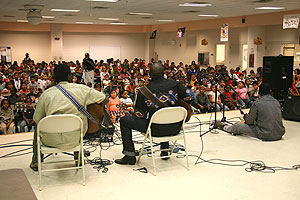
For the past eight years, JAMinc and the Richmond Folk Festival have partnered to bring internationally recognized folk musicians into Richmond schools to perform for students. This partnership has enabled over 23,000 students to be exposed to a diverse array of folk music rooted in cultural traditions from across the globe.

Tomorrow, JAMinc, a local nonprofit music education organization, will coordinate ten school performances by six of the festival musicians at Richmond area schools, including the Faison School for Autism and St. Andrew’s School.

Coordination involves a host of volunteers who donate their time and resources to organize transportation and sound equipment set-up to ensure an enjoyable and unique musical experience for the students and musicians, alike.

This year, select students will be treated to a performance by Tuvan throat-singers, Alash.  Throat-singers learn to sing multiple harmonic notes with one voice, sometimes creating two and three separate tones.

“It is the most amazing, out of this worldly kind of sound that you’ve ever heard,” said Tim Timberlake, Richmond Folk Festival programming committee member and JAMinc chairman.

Students will also have a chance to experience music from polka and reggae groups, as well as traditional mountain music from Elizabeth LaPrelle and Anna Roberts-Gevalt. Exposure to a variety of musical genres teaches students that the word “folk” can have multiple meanings across different cultures.

“Folk is the indigenous music from any culture. It’s the traditions that are passed down that stem from the roots of all of these different cultures all over the world,” explained Timberlake.

Promoting music education in the school systems is something that is very important to JAMinc and the Richmond Folk Festival, but music education goes well beyond the school walls for both organizations. It took some time to educate the people of Richmond about the diversity that underlies folk music, but attitudes are moving in the right direction.

“The complexion [of the festival]…beautifully reflects the demographic composition of Richmond. There is nothing that happens near here that approaches that success of being able to bring everybody together, to be that inclusive, have it all work and have everyone have a wonderful time and celebrate music together,” said Timberlake.

In addition to coordinating the school music events, JAMinc is sponsoring four local musical acts on the festival’s Genworth Financial Family Stage. Saturday’s sponsored acts consist of the kids group, Silly Bus, and VCU graduate Andrew Ali, who which will lead a harmonica workshop. JAMinc sponsor, TKL/Cedar Creek Case Shoppe, donated approximately 100 harmonicas to be passed out to the children who want to take part in the workshop.

On Sunday afternoon, JAMinc will present big band composer, Samson Trinh, who will conduct a ukulele workshop and play alongside a ukulele orchestra of young musicians. Sunday’s Family Stage festivities will come to a close with the high-energy stringband music of The Hot Seats Shortband.

It is the hope of JAMinc and Richmond Folk Festival organizers that young music lovers will walk away from these experiences inspired and enlightened.

“Generally, music just has that potential for just opening and unlocking doors.  At their ages their minds are open, and they are receptive to hearing and learning new things. That’s definitely what this is all about–to let them hear some things and let them realize that there is more to the world and to music than what they are hearing on commercial radio,” said Timberlake.

The Richmond Folk Festival is a free event from October 11-13, 2013. Organizers anticipate that this weekend’s festivities will draw over 200,000 attendees to Richmond’s beautiful, historic downtown riverfront. Festival grounds include the American Civil War Center, Brown’s Island and Tredegar Street.

In addition to being held on a picturesque campus, the Richmond Folk Festival boasts a stellar line-up that spans the globe and a solid foundation of dedicated volunteers working behind the scenes to ensure a smooth and successful event.

“It’s a joint effort of a whole lot of people, the city, Venture Richmond, the National Council for the Traditional Arts and a huge bank of volunteers,” said Timberlake.

JAMinc hopes to continue their role in the Richmond Folk Festival well into the future. The collaboration has extended JAMinc’s mission of promoting music education and appreciation beyond their school and evening concert series, and established a bond that gets stronger with each passing year.

“I think the Richmond Folk Festival appreciates what we do and I think we, JAMinc, really enjoy being associated with such a quality event, such a successful event and such a jewel in Richmond’s crown. All of us are really proud of how this thing has played out, that it’s continuing and that most people will say it’s the coolest event in town, down there on the river in the RVA,” said Timberlake.

Leave a comment

Filed under Festivals, Live Shows, Music

Album Review: Bombadil’s “Metrics of Affection”

100113mBeatsRev1RGB.jpg

If The Beatles and Weezer got together and had a baby, and that baby joined the drama club, that baby would grow up to be Bombadil.

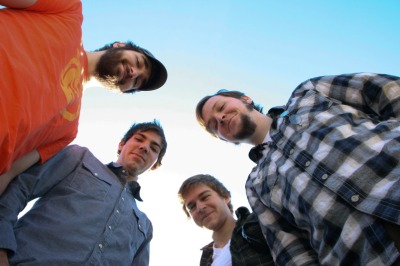
Consisting of multi-instrumentalists Daniel Michalak, Bryan Rahija, Stuart Robinson and James Phillips, Bombadil borrows its name from J.R.R. Tolkein’s character, Tom Bombadil, who is equally as enchanting as the Durham-based quartet. Having just released their self-produced, fourth LP, “Metrics of Affection,” Bombadil proves that authenticity mixed with a dash of merriment and a handful of emotion equals the perfect musical recipe.

Last month, the touring members of Bombadil graced the Tipsy Teapot stage in their idiosyncratic band regalia — collared shirts, ties, and accessorized sports coats — and treated a modest but attentive audience to many of the tracks off of their new album. While the live versions of these songs offered a quirky visual to match the lyrics, the intricacies are best revealed and reveled on the studio version. Sitting down with the liner notes, reading the lyrics and allowing the songs to tell their stories truly takes the listener on a journey through the land of Bombadil.

On “Metrics of Affection,” Bombadil stands proudly at the helm of their ship and assumes complete creative control. With production in-house, the band was able to push the boundaries and experiment more than on any previous albums, resulting in a rich but not overproduced collection of songs. While vocals and traditional instrumentation — piano especially — remain at the forefront of each track, thoughtful use of samples, synths and drum machines advances the overall sound without stripping its playfulness and originality.

Throughout the album, vocals and keys emerge in the spotlight, as hints of acoustic guitar round out the sound. Melodic and often flirty piano accompaniments, paired with witty, relatable lyrics about love, loss, whales and cats certainly draw listeners in for a deeper auditory experience.

The album opener, “Angeline,” offers a catchy beat and lyrics of friendly advice to move on from the past, all made sweeter by the charming harmonies of Christy Jean Smith. “Learning to Let Go” is the album’s clap-stomp sing-a-long track, accompanied by faint horns that lend an imperial air.

The ever-popular banjo makes its first appearance on “Born at 5:00,” though it is not what makes this song one of the album standouts. Here, Bombadil succeeds in packing all of the milestones of one man’s life into a 3:11 minute song — a bold and touching reminder of the fleeting nature of of our time on Earth.

“Isn’t It Funny” features a militant drum line underlying Michalak’s first attempt at rapping. With an Eminem-esque cadence, Michalak’s passion surfaces while recounting an illness that almost ended his music career. The men of Bombadil lay their emotions out for the world to hear on heartfelt ballads like “Boring Country Song” and “Have Me,” and heart-breakers like “What Does It Mean” and “One More Ring.” This sentimental roller coaster ride of love and loss is capped off by “Patience is Expensive,” a hauntingly beautiful piano instrumental that oscillates somewhere between hope and despair.

Quirkiness sets in with “When We Are Both Cats,” which speaks of unrequited love and feline reincarnation — not the typical love song, folks. The animal theme continues on the old-timey, maritime track, “Whaling Vessel,” where Bombadil sings from the point of view of a hunted whale. While these song themes may seem off-putting to some, their unique nature translates magically, further lifting the album’s spirit.

Propelled by a rolling piano melody, the album closer, “Thank you,” is the perfect note on which to end this baker’s dozen of goodness. With lyrics like, “Keep your family close/Because when you get in trouble/They’ll be the last to lose their hope/And say your prayers every night/They don’t have to be to God/It just helps to sort your thoughts/And you never know they might be right,” listeners are called on to be grateful and gracious for all of the small, but meaningful moments in life.

Bombadil’s most recent installation combines all that is currently overdone in folk-pop — stomp, claps, banjo, cellos, unidentifiable accents — and somehow makes it feel renewed. Perhaps it is the persistent piano or the eccentric storytelling. Regardless, “Metrics of Affection” is a triumphant composition that covers the emotional spectrum of life and love, beginning with a journey and ending with gratitude.

Leave a comment

Filed under Music, Review

Another Day Another Time – An Epic Evening of Folk

1278410_10153313683020113_110751851_n

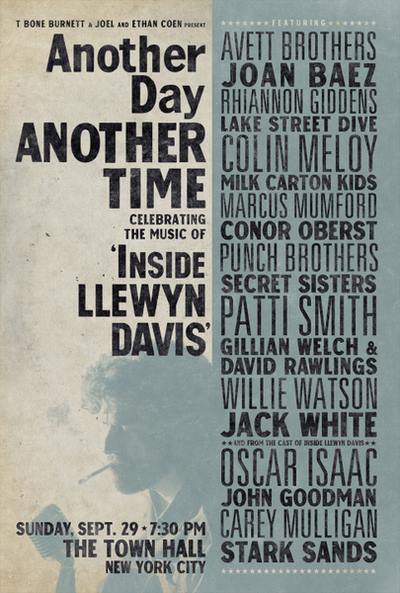
It was a packed house at New York City’s Town Hall Sunday night. In honor of the upcoming release of the Coen Brothers’ latest film, musicians and actors gathered together to celebrate folk music at Another Day, Another Time, a concert to benefit the National Recording Preservation Foundation. Coming to theaters on December 20, 2013, the film, “Inside Llewyn Davis,” follows fictional character, Llewyn Davis, a struggling folk musician in New York City in the 1960s and is loosely based on the life of Dave Van Ronk. The concert was filmed for an upcoming Showtime documentary to be released on December 13th.

Just around the corner from Times Square is New York City’s historic Town Hall. At Another Day, Another Time, every seat of the 1,495-seat venue sold out in seconds. Lovers of folk music filled the old theater that first opened its doors in 1921. Light from a hanging chandelier lit a sea of red chairs and the stage sat lined with oriental rugs, microphones, and a drum kit. Stars of the movie, John Goodman and Carrie Mulligan, hosted the concert.  Serving as musical director, T. Bone Burnett called upon artists such as Jack White, Patti Smith, The Avett Brothers, Marcus Mumford, Gillian Welch and David Rawlings, Conor Oberst, Collin Meloy, Punch Brothers, and the folk revivalist herself, Joan Baez, to create such a momentous event.

Joined by my friends in the last row of the balcony of the small theater, I looked down at the stage in anticipation of what would happen in the next few hours. Kicking off the show was Brooklyn-based band, Punch Brothers. Led by Chris Thile on mandolin, they started off the night with a cover of “Tumbling Tumbleweeds” by Sons of the Pioneers and then switched over to a song of their own, “Rye Whiskey.” This would not be the last time we saw Punch Brothers on stage, they joined several acts throughout the night. Mumford joked, calling them the “house band” for the evening. The crowd swayed and sang along with Willie Watson, Gillian Welch and David Rawlings, to “This Land is Your Land” and there would be a number of collaborations throughout the night.

My excitement grew with each announcement. Decked out in a tan blazer, blue jeans, and a cowboy hat, John Goodman stood at the podium cracking jokes and introducing acts. Next on stage would come three new and upcoming groups, The Secret Sisters, Lake Street Dive, and The Milk Carton Kids. Although these groups are lesser-known acts, they captivated the audience just the same. The Milk Carton Kids’ Kenneth Pattengale teased that they were not famous enough to have someone else adjust the height of their microphones.

Goodman returned to the podium and informed the audience that due to a scheduling conflict, his costar in the film, Justin Timberlake, could not make the show, however his understudy would be filling in. Much to everyone’s surprise, Elvis Costello walked out on stage and performed “Please Mr. Kennedy,” Timberlake’s song off the film’s soundtrack. He was joined by actors Adam Driver and Oscar Isaac, also in the film. Isaac, plays the lead roll of Llewyn Davis and took the stage to sing his songs from the film as well, wowing the crowd with his raw talent and skillful guitar playing.

Keb’ Mo’ and The Avett Brothers would take the stage before breaking for an intermission. For the first time of the night, we saw a band perform three songs. The Avett Brothers–Scott and Seth Avett, Bob Crawford, and Joe Kwon–walked on stage with instruments in tow. Scott Avett began to strum his banjo and much to my surprise, played the song “All My Mistakes” from their 2007 album Emotionalism–a song that doesn’t often draw laughter from a familiar crowd, but did that night for those who had never seen Scott Avett put “quotations around the word friends.” The Avetts would play “That’s How I Got to Memphis,” a Tom T. Hall cover, and their song “Head Full of Doubt, Road Full of Promise.” Unlike its studio version on the 2009 album I and Love and You, “Head Full of Doubt” was played acoustically. Lyrics that were typically sung loud, turned much more subdued. It was seamlessly beautiful and showcased The Avett Brothers’ genuine talent. The crowded remained quiet with an occasional holler from the audience, fueled by excitement.  It was clear that many people had attended the concert particularly looking forward to The Avett Brothers’ performance.

The lights grew brighter and the audience scattered for a brief intermission. Some celebrities blended into the crowd, equally as excited to witness this once in a lifetime concert. Famous faces such as Paul Rudd, Taran Killam, Glenn Close, Jesse Eisenburg, and John Slattery were spotted. Actor Rudd, has confessed his love for music from bands like The Avett Brothers and Mumford and Sons in interviews. It was very exciting for me to be in the same room with some of Hollywood’s elite. To sit in the same in the same room as Susan Sarandon and Frances McDormand was quite surreal.

Next on stage was, the one and only, Jack White. Dressed in his signature black suit and blue tie, he performed two old folk songs and topped his set off with a White Stripes classic, “We Are Going to Be Friends.” Following White’s remarkable performance was the stand out performer of the night, Rhiannon Giddens. Giddens stood in a long red lace gown in front of the audience. Typically, her band mates, The Carolina Chocolate Drops, would surround Giddens. It was on this night, that Giddens showed off her phenomenal voice on her own. She sang Odetta’s “The Waterboy” and two Gaelic songs that brought the audience to their feet with applause.

Patti Smith engaged the audience with a cover of “Babe, I’m Gonna Leave You,” that she learned from friend, Joan Baez. Smith then welcomed The Avett Brothers, Punch Brothers, and Lake Street Dive to help her sing “People Have the Power.” Mid song, Baez herself walked out to join Smith in the chorus. Baez went on to take the stage all to herself with her rendition of “The House of the Rising Sun.” Mumford, frontman of the band Mumford and Sons, joined her in singing “Give Me Cornbread When I’m Hungry,” a song made famous by John Fahey. Mumford later took the stage unaccompanied.

As the night grew to a close and after nearly four hours of music, the star of the “Inside Llewyn Davis,” Isaac reemerged with Punch Brothers and Mumford. They sang “Fare Thee Will” and “Farewell” from the film’s soundtrack. It was a fitting ending for an unbelievable evening. Another Day, Another Time was a once in a lifetime opportunity I feel very fortunate have attended at what The Huffington Post called “the concert of the year.” I look forward to reliving the experience through the Showtime documentary that will air in December. It was a historic night for folk music, and I’m excited for the world to see it.

Karrisa Sevensky strikes again!  Thank you Karissa for capturing the essence of such a historical and wonderful evening of folk music

1 Comment

Filed under Live Shows, Music

Laura Marling – Once I Was an Eagle

album

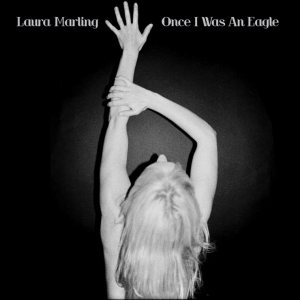
Approaching an album with a mind free of tabloid headlines and twitter feeds has its advantages.  The listener can conjure up vivid imagery from the melody and lyrics, rather than focusing on the musician’s after-hour escapades.  Much like reading a novel before seeing the movie and predicting who will be cast in the lead roles, this approach taps into the listener’s creative mind in which he/she can find a more personal link to songs.  It is with a clean slate that listeners should experience U.K. singer-songwriter Laura Marling’s fourth album Once I Was An Eagle.

This 16-song neo-folk album is busting at the seams with intimate details of Marling’s life–  love gained and lost, anger, strength, survival, defiance, honesty, weakness, and all that falls between the cracks.  Without seeing Marling’s face, one may overestimate her age based on the cumbersome weight that her songs carry.  The reality is that at 23-years of age, Marling is an old soul trapped in the delicate, sinewy, ivory vessel that graces the album cover.  She epitomizes the yin-yang—a soft exterior with a hardened heart—and balances the two extremes throughout the album with a veteran ease and poise.

Collectively, the tracks on Once I Was An Eagle can easily be the soundtrack for the next Wes Anderson film.  In line with an Anderson film, this album is quirky and uncomfortable at moments—forcing pause and deeper thought.  It is unapologetically uncluttered, which allows Marling’s soothing vocals to be the album’s epicenter.  Her voice soars through an expansive range, as arrangements drift from quiet sliding fingers on guitar strings to crashing drum circle crescendos.  Throughout the album, tones of folk masters Joni Mitchell and Bob Dylan reveal themselves, though Marling succeeds in adding her unique sound to the earthy, outspoken genre.

Upon listening, the album’s first four songs translate as one long track, as if Marling just sat in the recording studio and folk-freestyled.  In their continuity, these tracks set the stage for what is to come.  On “I Was An Eagle” Marling assumes her predatory role, singing, “I will not be a victim of romance/I will not be a victim of circumstance.” “Breathe” gives listeners a glimpse into one or many of Marling’s past broken relationships with relatable lyrics like, “When you wake you’ll know I’m gone/Where I’m going there’s no one/So don’t follow me/Whatever you might hear or see.”

The predator goes for the kill on drum-heavy “Master Hunter” where Marling channels Fiona Apple’s feminist grit and makes it her own.  The delicate, seductive Spanish guitar intro on “Little Love Caster” lulls listeners into a false sense of security as they are pulled into Marling’s praying mantis lair.  On “Undine” Marling tips her hat to Nashville with some good old country picking and a love story, while “Where Can I Go?” borrows melody from Starland Vocal Band’s 70’s hit “Afternoon Delight.”  “Once” unveils emotions that accompany the often grueling task of moving on from heartbreak, while “Little Bird” attempts to heal the broken spirit and soul.   Each track feels tightly woven to the next, further strengthening the fabric of the story Marling shares with her listeners.

Once I Was An Eagle is such a stunning lyrical journey, that it still seems an unlikely product of such a young musician.  Marling’s insight and openness fall in line with what folk music has portrayed for decades, yet she blurs the lines just enough for it to feel fresh and new.  With this album, Marling is blunt and makes no excuses, and in that honesty she soars above the rest to perch and take in the view—even if just for a fleeting moment.

Leave a comment

Filed under Review

Interview – Dolph Ramseur

dolphramseur

Thirteen years ago, Dolph Ramseur left the tennis court to start his own independent record label, Ramseur Records. He had no real experience in the music industry, but was armed with a deep-seated passion, blue-collar work ethic, and relentless determination–three key ingredients for success in any industry.

Today his roster includes bands like The Avett Brothers, Langhorne Slim and The Law, Bombadil, Paleface, Jim Avett, David Wax Museum, Carolina Chocolate Drops, and Samantha Crain. After over a dozen years in the business, Ramseur still maintains a humble demeanor, a sweet southern charm, and a homegrown love for music. Simply put, he is a fan just like the rest of us.

Recently, Evolution of a Fan caught up with Ramseur via phone to learn a bit more about the man behind the music:

EOAF: Good morning Dolph, thank you for taking the time to chat with me. Briefly, what is a typical day like for you?
Dolph Ramseur: Well, I get about 250 emails a day, and then on top of that, mix that with phone calls and instant messages. But, it’s really just sort of making the foundation for the artist, building upon that, trying to see what is coming in the future, what’s down the pipeline and plan for that accordingly–whether it’s tour dates or recording.

EOAF: So are you pretty hands on with promotion and booking for some of your lesser known bands?
DR: To a certain extent we are. Some of our acts don’t have booking agents so we have to find shows for them. But then the ones that do [have booking agents] we help out with the promoters, and getting the word out about shows and when do tickets go on sale, and how do we promote these shows, and what kind of Facebook ads are we going to take out, and what should we post on the website. There’s a lot of moving parts.

EOAF: Do you have a fairly large staff to do this or is it still a pretty small operation?
DR: Well, we are still small. I have an employee in Nashville, one in Los Angeles, and then one in the Winston-Salem area, and I am in Concord, NC.

EOAF: So you are still working out of your house?
DR: Yes, we all do that.

EOAF: That’s convenient.
DR: Yeah, we’ll its got its advantages and pitfalls, as anyone who works out of their house will tell you.

EOAF: That type of flexibility sort of allows you to move where you need to go. Do you often get on the road to support your musicians?
DR: Yes, although I can’t do it as much as I used to, just because it’s so busy on all aspects of what we do. But, yes, I get out quite a bit.

EOAF: What would you say over the past year has been one of your highlights of being at a show?
DR: Well the two shows with The Avett Brothers at Red Rocks this past year were great. Seeing The [Avett] Brothers down in Atlanta in front of 12,500 people was pretty special as well, because I was at the first show when the guys played in Atlanta. You know you go from playing to 50 people to 12,500 and you see the growth of the band. It’s pretty amazing.

EOAF: Does that shift ever seem overwhelming? Do you ever ask yourself, “How did we get here?”?
DR: Well, I know kinda how we got there. It was a lot of hard work, and a lot of talent from the band. I feel like we’ve got one of the best fan bases in the world. So, you mix all three of those things together and some special things can happen. But in some ways I’ve lost scope of maybe how big it is, and maybe that’s a good thing. I mean, I saw the guys play to 8 or 9 people in Charlottesville, VA 10 years ago and they put on the same show to those 9 people that they did at their last show in Charlottesville to over 4,000. So, I think we all have blinders on when it comes to that. We are thankful that we have that kind of crowd, but it’s not something that we, I mean, it is what it is.

EOAF: Now some of the bands that I believe you have on your roster now were introduced through your relationship with The Avett Brothers. Do you kind of keep an eye on their opening bands as a way to find new talent?
DR: It just depends. I find them everywhere.

EOAF: Are you actively looking for new talent, or do you feel like you are pretty much at capacity at this point?
DR: Well, we are pretty full, but you never know what you might come across that strikes us. That’s sort of a hard one, you know, because you just kind of get bit by the love bug on it, so I just don’t know.

EOAF: You’ve probably served as a mentor for the musicians that you manage, but do you also serve as a mentor for your staff?
DR: There’s a lot of give and take with my staff. I always had the saying, ‘big team, little me’ so we always learn from one another. I’m learning something everyday at this job. So, we share the knowledge of this, and I think the main thing that we are trying to do is to have fun doing this, because there are so many people working jobs that hate their jobs. My staff and I are really lucky because we are doing something we really love and have fun doing. As far as being a mentor, I’m not sure. I think we are all in this together, so it’s not necessarily that kind of role I’m playing.

EOAF: As a manager, how would you define your job. What are the important qualities that you think have led to your success?
DR: I guess, well, you see in some ways I don’t even feel like we are in the music business. I’m in The Avett Brothers business. I’m in the Carolina Chocolate Drops business. I’m in the Bombadil business, the Langhorne Slim business. I feel like all of these acts we work with are all handmade kind of acts. They are all unique. They are all different from the norm. It’s tough for me to answer. I’ve been at this now for about 13 years and I had no experience of it before getting into it, so maybe I had no bad habits and I didn’t know the pitfalls necessarily. We kind of just went by the seat of our pants. But, you know, I’m from a very blue-collar family, so I’m just a hard worker first and foremost. I show up everyday, and I care. If you show up everyday and you care about what you are doing, it’s almost hard not to have success, because there are so many people not showing up with that passion. I can’t speak for those folks, but we just take a lot of passion and pride in this, and I want everybody on the planet to hear these acts.

EOAF: That passion and that gut feeling you get when you find a new artist, or hear someone like Langhorne or Paleface, does that feed into your decision to bring them on? Would it be difficult for you to represent someone who you didn’t have that feeling about?
DR: Yes, it would be tough. It just wouldn’t be fun.

EOAF: You’ve said in other interviews that you are really just a fan of music, and that is kind of what got you into this. Do you think your musical tastes have evolved since staring Ramseur Records 13 years ago?
DR: Well, I’ve always been left of center when it comes to music, so I like all forms. If anything I get jaded because I hear so much stuff, and it’s hard to digest so much music that’s coming at me sometimes. My father was a big Johnny Cash fan. He was a big Hank Williams Sr. fan. He was a big Roy Orbison fan. He loved The Platters. He was a big Pavarotti fan. My father is about as blue-collar as you are going to find. He didn’t go to college, real hard-working fella. So, he exposed myself and my sister to a lot of different kinds of music. So maybe I get that a little bit naturally. He also had a thing when it came down to gospel music, he would rather have someone who was not a great singer but put a lot of heart and soul into it as opposed to a great singer who was just going through the motions. I learned that early on from him. I don’t know how much my tastes have evolved, because I just like so much stuff.

EOAF: You grew up surrounded by all of that great music. Do you actually play an instrument or sing?
DR: No. I do not. I keep telling people that I am one of the world’s greatest musicians, I just haven’t found what instrument will get it out of me. I do not play, and I think I learned that from tennis. I taught tennis at country clubs and I went to college for tennis and I kind of lost the passion for that because I did it so much. I’m almost glad I don’t play an instrument, because it kind of keeps me from overloading too much.

EOAF: When you started Ramseur Records, did you start it with the intent of putting out albums and being a manager, or did that combination evolve over time?
DR: Yeah, it kind of evolved. Again, I really didn’t know what I was doing at all.

EOAF: And starting the label came out of a relationship with Martin Stephenson?
DR: Yes. Martin had gone through the whole gambit of the industry from being an independent artists who got signed to a major label. Martin, very much like The Avett Brothers, never had radio success, but he was selling thousands of tickets in the UK, and really doing well. He had a very similar story to what The Avett Brothers have going on, where they have kind of danced around mainstream success but sort of still stayed under it. That’s kind of what Martin did. So, I learned quite a bit from Martin and he is very similar to The [Avett] Brothers and he’s got the same gift they’ve got.

EOAF: How did you meet him?
DR: That kind of goes back to me being a music fan. He had left major labels and went through the indie route and was putting out records on his own, and I reached out to him. He noticed I’m from NC and he’s a bit of a fan of music from this state, like Doc Watson and Charlie Poole and the Piedmont blues players from the state. So we just struck up a friendship, and I told him that he should come over to NC and I will introduce you to some pickers. That’s kind of how it all happened. I really didn’t have any real idea of getting into the business. When I met Martin I could see where musicians need help, and they need some support and someone to help and put fuel on the flame.

EOAF: So, a manager is like a Jack-of-all-trades. You have to do everything, wouldn’t you say? You are the sounding board, you book, you promote, you do all of these things.
DR: Yes, definitely.

EOAF: In that light, I saw that The Avett Brothers recently released their first single off of their next album. Are you involved in those types of decisions, like which single will be released, album art, song sequence, etc?
DR: That’s a yes and no type of question. It differs for every act, because some acts will want our input on a certain aspect of the [process]. Like, some may want to know feedback on a single. Some may be dead set on a track listing and some may be dead set on artwork. Some will need help on artwork, and some will need help on the track list. It varies from case to case. We are and we aren’t, just depending on what the project is, where the artist is. Sometimes the artist may change where they need help, because they are so close to the project. They sometimes need help from someone that’s got a little separation from it.

EOAF: In terms of an artist like Langhorne Slim, his last album, to me, was Grammy-worthy. Does it ever surprise you when things don’t get as much attention or the attention you think they deserve?
DR: No, no. We are just thankful for the attention we get and we can’t sit around hoping and wishing and ‘what ifs.’ We have to play the deck of cards we are dealt. You know that album to date has sold 22,000 copies. That is a lot of records for an independent act like Langhorne. I look at all of then albums like babies. You want them to grow up and do well. Sometimes they do and sometimes it doesn’t stick. It’s hard to say what America or the world wants, and the way certain things go. You know, who knows? I have no clue.

EOAF: How do you find a balance between managing all of your acts?
DR: It’s hard for me to know what time is spent on what. With some of my acts, certain employees will spend most of their time with those certain acts. Of course I spend most of my time with The [Avett] Brothers, with The [Carolina Chocolate] Drops. So it’s just kind of hard to say how that time is divided up. I’m so close to it, it’s hard for me to kind of step back and see it.

EOAF: Can you speak about your handshake contracts? Why does this work for you and has it ever backfired?
DR: No, it hasn’t backfired and I don’t know, I just got into this business to have fun. I feel like if so much energy is spent on that kind of stuff it just sort of takes the spirit out of things. That’s not to say that you can’t have great spirit and great goodwill between two people in a contact, but I just kind of like the old thing that you get further with shaking hands than balling up a hand in a fist. Again, I don’t recommend it to other people. I just do my own thing.

EOAF: What kind of advice would you give to a rising musician who is looking to get signed or looking for someone to represent him/her?
DR: I would say more than anything would be to try to master your craft, and also try to realize that no matter how great you are, there’s always ways to improve. I don’t really deal with anyone like this, but I kind of sense that some artists think they are the greatest thing since sliced bread. A lot of times that’s sort of when they plateau and never kind of get any further down the road than they already are. I feel like if you are an artist who is always trying to push the boundaries of what you are doing and always trying to improve as a singer, as a songwriter, as a performer, I would say definitely master your craft and a lot of things will fall in place with that. Also, there’s this sort of sense that you’ve got to get this success right now, and I don’t feel that’s the case. A lot of times people who did have success quickly, it would be a rocket ship–as soon as it goes up, it’s coming right back down. You have to think of it more as a balloon ride. Also I always say to steer clear of the American Idol, The Voice, those kind of things. I just kind of feel like that’s all smoke and mirrors in my opinion.

EOAF: Charity appears to be a big part of your business model. Why is that so important to you? Was that something that you thought of from the beginning, or has that just evolved over time?
DR: That might be my family background. I feel like all of my family has sort of had that mindset. We’ve all been pretty fortunate and hardworking. My grandparents where cotton mill workers, and they were real thankful to just have a job, and they were really active in their church and in the community. I remember my grandfather, who was born in 1902–my other grandfather was born in 1900–but my Grandpa Ramseur I remember, as a kid, every Thursday he would dress up in his Sunday best and go to the hospital and just pray for people in the hospital. He’d just go room to room and ask them if it was okay if he could pray for them. He did that for years. So, I guess I get it kind of honestly.

EOAF: Is there anything coming up in the near future, like the My Favorite Gifts Christmas Album, that you have in the works?
DR: There might be some things in regards to St. Jude with Bob’s daughter. Hopefully there will be some things that will come from that. We’ve got a new Cheerwine campaign with The [Avett] Brothers, the second installment of The Legendary Giveback and that’s going to be pretty exciting. We are always looking at things and seeing what might work. There are a lot of things being done that no one even knows about. We are fortunate to be in a position to help.

EOAF: That is awesome, and the fan base definitely takes it to another level as well. They organize their own fundraisers. I’ve seen it in action. It’s pretty amazing and inspiring, and it’s nice to know that you all have a piece in that, and that you’ve inspired other people as well.
DR: I can’t speak any more highly for the fan bases that [our] bands have. We are so fortunate. I feel like all of the acts realize that they wouldn’t have the careers they’ve had without the fans for sure. That’s another thing that I think has benefited me is growing up in the hub of NASCAR. When I was a kid, Richard Petty would sign autographs until nobody wanted one, but he would always thank the fans and let the fans know that without the fans he wouldn’t have the opportunity or then platform to do what he does.

We’d like to thank Dolph Ramseur for his time and contribution to Evolution of a Fan. To learn more about Ramseur Records and the artists, please visit the official website and Facebook page.


Leave a comment

Filed under Interview, Music

Interview – Time Sawyer

timesawyer

“Saturday morning was come, and all the summer world was bright and fresh, and brimming with life. There was a song in every heart; and if the heart was young, the music issued at the lips. There was cheer in every face and a spring in every step. The locust-trees were in bloom, and the fragrance of the blossoms filled the air. Cardiff Hill, beyond the village and above, it was green with vegetation, and it lay just far enough away to seem a Delectable Land, dreamy, reposeful, and inviting.

Mark Twain, The Adventures of Tom Sawyer

There is something intriguing about the process of naming a band. While some musicians choose to use their surnames, others find inspiration in art, literature, or everyday events. Such is true for the up-and-coming band out of Elkin, North Carolina named Time Sawyer. This folk-rock band, which consists of Sam Tayloe (vocals, guitar), Kurt Layell (lead guitar), Houston Norris (banjo), and Clay Stirewalt (drums), came together a few years ago to make “real music” with a grassroots feel matched with high energy. It was out of this common mission that they started to lay a foundation and grow a loyal fan base. Beyond bringing their own music to the people, Time Sawyer founded Reevestock Music Festival. Now in its third year, Reevestock not only boasts a great line-up for a smaller, more intimate festival, but also remains true to its local roots by benefiting the restoration of Elkin’s last theater, The Reeves.

I recently caught up with Time Sawyer’s Sam Tayloe to learn a bit more about the band’s name, their story, songwriting, and how they are building a music empire in their rural hometown.

Evolution of a Fan: Can you give me a brief explanation of where the band name “Time Sawyer” came from?


ST: Kurt and I started the band in 2010 and we were looking for something to connect where we are from to where we are headed.

“Time Sawyer” let us do that by pulling from the character Tom Sawyer to represent the rural area that we came from (Elkin, NC) while also being used as a grassroots character, in touch with [his] craft.

We chose “Time” because, in songwriting, I don’t think there is anything you can write about that doesn’t have time involved. Truly in life I don’t think you can either. But in songwriting, you can be writing about how much you love how great something is and you want time to stop dead in its tracks, keeping you in the moment, or, you could be doing all you possibly can to escape from some hard times, relationship or otherwise, so you want time to move along. It just seemed to fit with time being such a constant with anything you are involved in.

EOAF: How did the current band come to be? How did you all meet?


ST: The current band is the only band, which has been really neat. Kurt and I started working together a bit earlier after being introduced by a mutual friend. It just kinda worked out that we got to add some really great supporting pieces without much work, as Houston was my best friend in high school and Clay, Kurt’s. We also have a 5th member that we love as an original–Mr. Bob Barone plays pedal steel with us anytime we can have him.

EOAF: It looks like you guys have turned out a lot of albums in a short amount of time. Who is the primary songwriter and what is the process like for the band? Is it a collaborative effort, or does the primary songwriter just come with the song and arrangements?


ST: Yeah, we try to keep our nose on the grindstone. Kurt and I are the primary songwriters. It’s been really fun to watch the operation grow as it has. Kurt is writing some amazing songs right now, and I’m really excited to work on this new record we are planning for later this year. Collectively we have written about 20 so far for it. When we write songs, usually Kurt or I will finish one entirely, show the other, get feedback, then bring it to the band to help with what else we should add to it, and form a direction for the song. Houston and Clay really bring a lot to helping with songs when they get to them. Recently however, Kurt and I have written some together, or had a song that was half way done but needed or chorus or bridge, etc and we would help the other. It really seems to be working well as we grow.

EOAF: What do you think makes a “real” song? 


ST: I think that is a very loaded question (haha). Real can be a lot of things, but I think genuine is the only thing that has to be constant. I feel like–and hope others see it the same way–being honest and genuine is something you can see/feel. There are times that you get duped, but those situations can be turned into genuine songs themselves.

EOAF: From where do you pull your musical inspiration (other artists, personal experiences, observing others)?

ST: Most of what gives us the fuel to write is our own experiences. I have begun some now to write a few “story” type songs where I don’t have to completely use all me, but usually am still personally connected to the song. Other musicians help to give us ideas as well. Kurt and I both have a few of the same favorite artist that help to inspire for sure.


EOAF: Talk a little bit about how the idea for Reevestock came about. I know you are in your third year and that it continues to grow. How did you come to decide to put on this festival, and why is it important to you/band?


ST: Reevestock is a festival that is really 3-fold. I started thinking about bringing some more music and activities to our hometown than I had when I lived there as a kid. Some of my favorite events to attend are music festivals so I figured I’d look into that option. After some research, it seemed like a feasible option. Choosing The Reeves Theater became more of a symbol than anything. The whole event is a benefit for The Reeves, but it’s also an event with purpose to benefit the whole town of Elkin and our musical needs. Maybe need is a bit far, but I’ll leave it. We do continue to grow and that really helps me to feel like we’re doing this right. We will continue to grow, have fun, and help benefit as many people as we can.

EOAF: What are you most excited about for this year’s Reevestock?

ST: All of it. Most (kinda) of the work is already done, so I’m eager to get the music going! It’s really a fun time.

EOAF: What does The Reeves Theater mean to you personally? Do you have childhood memories of going there to hear music/plays/movies? If so, would you share a few?


ST: Honestly, I don’t have any memories of the Reeves as a kid. I believe I was taken by my mom to see the Lion King and a few other movies there, but I have no recollection of it. As I said before, it helps to serve as a symbol of just keeping music alive.

EOAF: What do you think is special or unique about Yadkin Valley music. Why is its preservation so important?

ST: I think music is special. No matter what people go through, people find music to connect with. Our area is rich in bluegrass heritage and is really known for that. Besides our bluegrass though, we don’t have much of a musical touch, so that is what I’m looking to change.

EOAF: On your webpage, whoever writes the blog entries often says “Hootie Hoooo” or calls your fans “Owlets”…This made me laugh when I read it. Where did that come from? What’s the significance of the owl references?


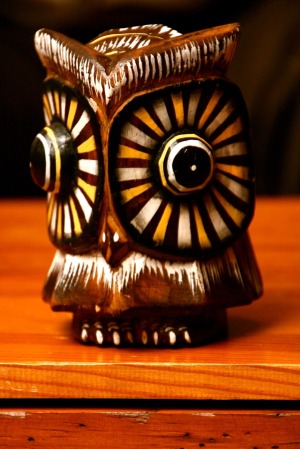
ST: Kurt brought the owl into the Time Sawyer world and we’ve had a wooden figurine of one since our very early shows. Since then we have made it our power animal, ha. We started “hooting” at fans on Facebook post a while back, but Kurt’s brother, Justin Layell actually coined “Owlets” for us while writing for us on tour this past spring.

EOAF: How do your songs typically evolve from studio to stage?

ST: We build and play songs for a while before the studio, even play lots of them live, so most of what you hear on a record as been tested. We do find different ways to add some zest or change a song up here or there after we have played them for a long time post-record. It’s always fun to throw in a surprise.

EOAF: What is one or a few of your favorite things about performing live shows in different venues (coffee houses, house shows, clubs, festivals). How does the audience affect your performance?

ST: All of those places bring so much to the table if you’re willing to take what is given. House shows offer you a very intimate and open-eared crowd. Those are really fun because of that. Jody Mace puts on Common Chord House Concerts, in Charlotte, NC. It’s a really great group. Festivals and venues give you that crowd interaction that may talk through some of [your set], but also give you that “let’s dance” vibe, too. You can take something good from any show. We want to make friends that become our fans. We are really close with our growing fan base.

EOAF: Finally, what do you want to leave behind as your musical legacy? What do you think fans/listeners will remember about Time Sawyer in the future?


ST: We want to make sure people remember Time Sawyer first, but we are making large strides to do that. We feel very confident in our growth and what our music stands for. That being said, I think we’d like to be remembered for our honesty and ability to connect with fans. Being genuine like we talked about. Being remembered as the most badass band of all-time works, too.

owl

Time Sawyer will be performing at Reevestock along with The Dirty Guv’nahs, The David Mayfield Parade, Joe Pug, A Great Disaster, Owen Poteat, Luke Mears, and The Jon Linker Band. The festival runs from Friday, August 2nd (at The Liberty) through Saturday, August 3rd (at Elkin’s Hidden Amphitheater). Single and two-day tickets are still available, so get out there and check out some amazing musicians, all while supporting the restoration of a historical landmark that captures the essence of the good old days in a small country town. Does it get any better than that!?

“In the common walks of life, with what delightful emotions does the youthful mind look forward to some anticipated scene of festivity!”

Mark Twain, The Adventures of Tom Sawyer

**Thank you to Sam Tayloe for his time and enthusiasm, and Jody Mace for constantly spreading the word about great music!**

5 Comments

Filed under Festivals, Interview