Tag Archives: rock

Interview – Time Sawyer

timesawyer

“Saturday morning was come, and all the summer world was bright and fresh, and brimming with life. There was a song in every heart; and if the heart was young, the music issued at the lips. There was cheer in every face and a spring in every step. The locust-trees were in bloom, and the fragrance of the blossoms filled the air. Cardiff Hill, beyond the village and above, it was green with vegetation, and it lay just far enough away to seem a Delectable Land, dreamy, reposeful, and inviting.

Mark Twain, The Adventures of Tom Sawyer

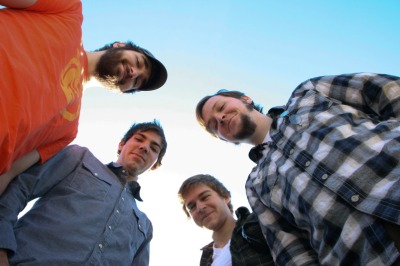
There is something intriguing about the process of naming a band. While some musicians choose to use their surnames, others find inspiration in art, literature, or everyday events. Such is true for the up-and-coming band out of Elkin, North Carolina named Time Sawyer. This folk-rock band, which consists of Sam Tayloe (vocals, guitar), Kurt Layell (lead guitar), Houston Norris (banjo), and Clay Stirewalt (drums), came together a few years ago to make “real music” with a grassroots feel matched with high energy. It was out of this common mission that they started to lay a foundation and grow a loyal fan base. Beyond bringing their own music to the people, Time Sawyer founded Reevestock Music Festival. Now in its third year, Reevestock not only boasts a great line-up for a smaller, more intimate festival, but also remains true to its local roots by benefiting the restoration of Elkin’s last theater, The Reeves.

I recently caught up with Time Sawyer’s Sam Tayloe to learn a bit more about the band’s name, their story, songwriting, and how they are building a music empire in their rural hometown.

Evolution of a Fan: Can you give me a brief explanation of where the band name “Time Sawyer” came from?


ST: Kurt and I started the band in 2010 and we were looking for something to connect where we are from to where we are headed.

“Time Sawyer” let us do that by pulling from the character Tom Sawyer to represent the rural area that we came from (Elkin, NC) while also being used as a grassroots character, in touch with [his] craft.

We chose “Time” because, in songwriting, I don’t think there is anything you can write about that doesn’t have time involved. Truly in life I don’t think you can either. But in songwriting, you can be writing about how much you love how great something is and you want time to stop dead in its tracks, keeping you in the moment, or, you could be doing all you possibly can to escape from some hard times, relationship or otherwise, so you want time to move along. It just seemed to fit with time being such a constant with anything you are involved in.

EOAF: How did the current band come to be? How did you all meet?


ST: The current band is the only band, which has been really neat. Kurt and I started working together a bit earlier after being introduced by a mutual friend. It just kinda worked out that we got to add some really great supporting pieces without much work, as Houston was my best friend in high school and Clay, Kurt’s. We also have a 5th member that we love as an original–Mr. Bob Barone plays pedal steel with us anytime we can have him.

EOAF: It looks like you guys have turned out a lot of albums in a short amount of time. Who is the primary songwriter and what is the process like for the band? Is it a collaborative effort, or does the primary songwriter just come with the song and arrangements?


ST: Yeah, we try to keep our nose on the grindstone. Kurt and I are the primary songwriters. It’s been really fun to watch the operation grow as it has. Kurt is writing some amazing songs right now, and I’m really excited to work on this new record we are planning for later this year. Collectively we have written about 20 so far for it. When we write songs, usually Kurt or I will finish one entirely, show the other, get feedback, then bring it to the band to help with what else we should add to it, and form a direction for the song. Houston and Clay really bring a lot to helping with songs when they get to them. Recently however, Kurt and I have written some together, or had a song that was half way done but needed or chorus or bridge, etc and we would help the other. It really seems to be working well as we grow.

EOAF: What do you think makes a “real” song? 


ST: I think that is a very loaded question (haha). Real can be a lot of things, but I think genuine is the only thing that has to be constant. I feel like–and hope others see it the same way–being honest and genuine is something you can see/feel. There are times that you get duped, but those situations can be turned into genuine songs themselves.

EOAF: From where do you pull your musical inspiration (other artists, personal experiences, observing others)?

ST: Most of what gives us the fuel to write is our own experiences. I have begun some now to write a few “story” type songs where I don’t have to completely use all me, but usually am still personally connected to the song. Other musicians help to give us ideas as well. Kurt and I both have a few of the same favorite artist that help to inspire for sure.


EOAF: Talk a little bit about how the idea for Reevestock came about. I know you are in your third year and that it continues to grow. How did you come to decide to put on this festival, and why is it important to you/band?


ST: Reevestock is a festival that is really 3-fold. I started thinking about bringing some more music and activities to our hometown than I had when I lived there as a kid. Some of my favorite events to attend are music festivals so I figured I’d look into that option. After some research, it seemed like a feasible option. Choosing The Reeves Theater became more of a symbol than anything. The whole event is a benefit for The Reeves, but it’s also an event with purpose to benefit the whole town of Elkin and our musical needs. Maybe need is a bit far, but I’ll leave it. We do continue to grow and that really helps me to feel like we’re doing this right. We will continue to grow, have fun, and help benefit as many people as we can.

EOAF: What are you most excited about for this year’s Reevestock?

ST: All of it. Most (kinda) of the work is already done, so I’m eager to get the music going! It’s really a fun time.

EOAF: What does The Reeves Theater mean to you personally? Do you have childhood memories of going there to hear music/plays/movies? If so, would you share a few?


ST: Honestly, I don’t have any memories of the Reeves as a kid. I believe I was taken by my mom to see the Lion King and a few other movies there, but I have no recollection of it. As I said before, it helps to serve as a symbol of just keeping music alive.

EOAF: What do you think is special or unique about Yadkin Valley music. Why is its preservation so important?

ST: I think music is special. No matter what people go through, people find music to connect with. Our area is rich in bluegrass heritage and is really known for that. Besides our bluegrass though, we don’t have much of a musical touch, so that is what I’m looking to change.

EOAF: On your webpage, whoever writes the blog entries often says “Hootie Hoooo” or calls your fans “Owlets”…This made me laugh when I read it. Where did that come from? What’s the significance of the owl references?


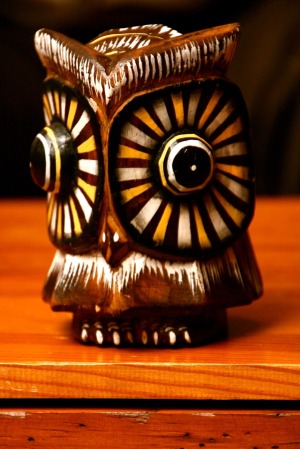
ST: Kurt brought the owl into the Time Sawyer world and we’ve had a wooden figurine of one since our very early shows. Since then we have made it our power animal, ha. We started “hooting” at fans on Facebook post a while back, but Kurt’s brother, Justin Layell actually coined “Owlets” for us while writing for us on tour this past spring.

EOAF: How do your songs typically evolve from studio to stage?

ST: We build and play songs for a while before the studio, even play lots of them live, so most of what you hear on a record as been tested. We do find different ways to add some zest or change a song up here or there after we have played them for a long time post-record. It’s always fun to throw in a surprise.

EOAF: What is one or a few of your favorite things about performing live shows in different venues (coffee houses, house shows, clubs, festivals). How does the audience affect your performance?

ST: All of those places bring so much to the table if you’re willing to take what is given. House shows offer you a very intimate and open-eared crowd. Those are really fun because of that. Jody Mace puts on Common Chord House Concerts, in Charlotte, NC. It’s a really great group. Festivals and venues give you that crowd interaction that may talk through some of [your set], but also give you that “let’s dance” vibe, too. You can take something good from any show. We want to make friends that become our fans. We are really close with our growing fan base.

EOAF: Finally, what do you want to leave behind as your musical legacy? What do you think fans/listeners will remember about Time Sawyer in the future?


ST: We want to make sure people remember Time Sawyer first, but we are making large strides to do that. We feel very confident in our growth and what our music stands for. That being said, I think we’d like to be remembered for our honesty and ability to connect with fans. Being genuine like we talked about. Being remembered as the most badass band of all-time works, too.
owl

Time Sawyer will be performing at Reevestock along with The Dirty Guv’nahs, The David Mayfield Parade, Joe Pug, A Great Disaster, Owen Poteat, Luke Mears, and The Jon Linker Band. The festival runs from Friday, August 2nd (at The Liberty) through Saturday, August 3rd (at Elkin’s Hidden Amphitheater). Single and two-day tickets are still available, so get out there and check out some amazing musicians, all while supporting the restoration of a historical landmark that captures the essence of the good old days in a small country town. Does it get any better than that!?

“In the common walks of life, with what delightful emotions does the youthful mind look forward to some anticipated scene of festivity!”

Mark Twain, The Adventures of Tom Sawyer

**Thank you to Sam Tayloe for his time and enthusiasm, and Jody Mace for constantly spreading the word about great music!**

5 Comments

Filed under Festivals, Interview

Interview – Bob Crawford of The Avett Brothers

IMG_1443

Just in time for the 55th Annual Grammy Awards, I caught up with Bob Crawford, bassist for The Avett Brothers, to talk about their new album “The Carpenter”, their first Grammy nomination, songwriting, and learning to play the fiddle, among other things:

EOAF: Congratulations on the success of “The Carpenter”.  How would you describe the album?

Crawford: Mature, thoughtful, intentional, poignant, pensive.  I think it’s heavy, and I think that’s where…I’ve had friends that I have had since I was 19, I’m 40 now.  I’ve had them say “I don’t know about this one.  It’s not your best.”  I think maybe we lose some people as we go, but maybe we gain people in some ways.  Maybe people come and go.  It’s not 2007 anymore, and it’s not 2005.  It’s a different time for us and I think you are being honest about where you are in life and that being reflected in your art and what you do and the way you do it.  It’s definitely going to change.

EOAF: How do you feel about how songs from “The Carpenter” have translated live?

Crawford: Oh they are great!  I think they have really translated.  You know what they have done?  Some of them,  like “A Father’s First Spring” and “February 7”, some of these song help us slow down on stage and try to meditate on being intense and calm at the same time.  It’s been a lot of fun.  It’s really fun to translate something like that live.  We’ve had slow songs in the past–God knows we have tons of them.  There’s a controlled, an intentional controlled aspect that comes musically, like a hang-there-in-space-and-time and have that patience.  I’ve always thought Neil Young did that so well with songs like “Harvest Moon”–how he could have a very intense mid-tempo.  That’s tricky for a musician.  It’s very hard.  The inclination is to play faster, because your heart is beating faster because you are on a stage and there are people.

EOAF: Is there any song from The Carpenter that you really love to play live?

Crawford: “Live and Die” is getting really comfortable.  It’s starting to feel like an old trusty.  We are getting better, with the last two albums, at holding songs back before the release.  We were never good at that before.  We’ve gotten better at that.  When you record the song, but you don’t really know them, you know your part and you know the section that you did a million times, but you don’t know it like when you are on stage and let it fall out of you.  When you record the record, there’s about a year before you really start playing the songs intently and constantly, and then they take on a life of their own.  So, they are coming.  Some of them are still in the coming phase, but some of them have been very surprising to play, like “Life” has been fun to play and “Paul Newman [vs. the Demons]” has been fun to play.  That can be really fun to play.

EOAF: You played “Life” for the first time live at The Christmas Jam in Asheville.  That was exciting to see you guys added last minute to the line-up.  How was that experience for you?

Crawford: It was fun!  Scott [Avett] and I used to live in Asheville, and I remember a time when the Christmas Jam came around.  For a couple of years we were asked to participate, but we do our New Year’s show in Asheville.  So it was finally good that this year we could be a part of it. It was really great, because we hadn’t played together in about a month and a half.  I mean we had practiced, but we hadn’t done a show.  It was fun because I was actually really nervous, but we did great.  I was like, “This is great I am nervous!  This is awesome.”

EOAF: That is a great feeling, and it was also a very different crowd.  The majority of the people there were sort of that jam-band crowd.

Crawford: Yeah!  It was nice to get that support.  I could also tell from the stage that [the audience was] really there to see String Cheese [Incident].  That made if fun.  It was nice to be in a room that we’ve sold out, and played two nights there before, and for it to be a new room—for the lighting to be different and for there to be no backdrop behind us.

EOAF: “The Carpenter” was nominated for the Best Americana Album award for this year’s Grammy’s.  Congratulations!  Where were you when you found out? 

Crawford: Thank you so much.  I was at home in bed.  I started getting texts saying “Congratulations” and this and that.

EOAF: How does the Grammy nomination play into your or The Avett Brothers’ definition of success?

Crawford: I think it’s always nice to be patted on the back, or nice to have someone tell you good job.  Let’s face it.  It’s great to get a compliment.  I mean, it’s always nice, but I don’t think it’s why we do it, and it’s not even necessary for us to continue doing it—to get those kind of accolades.  We’re going to keep doing what we do probably until it doesn’t seem useful anymore, until there’s no need to write songs, until we feel like we’ve plateaued, or we feel like we have nothing to say, or until people stop coming to see us live.  But I think the first thing, besides a tragedy, that would hasten us not doing it would be if we had nothing to say.  We always told ourselves earlier that we would stop doing it if it seemed like we plateaued—if it seemed like it wasn’t going anywhere any longer, you know.  I don’t know that we are there yet.  I think we hope to do it forever. Maybe there are years to take off, or we can take a break, but I hope it can still exist in the same light.

EOAF: It is great that you guys have been getting recognized more for what you are doing.  In that notoriety you have been asked to play with some pretty big names over the past two years—Bob Dylan, you’ve played for Tom T. Hall, and you did the Crossroads sessions with Randy Travis.  Is there anything from those specific experiences that really stands out to you? 

Crawford: Well they are all really touching and exciting.  Obviously the Bob Dylan thing is surreal.  It’s even surreal now because it doesn’t even feel like it really happened.  You know? It’s one of those things.  “Did that really happen?”  It was really exciting to work with Randy Travis.  He was great, I mean really awesome.  He was great to be around and a really nice guy.  I think we really blended well together.  I think it’s a nice match and definitely a connection there.  They are all really great, but we have to keep in mind that to share the stage with somebody or to collaborate isn’t the main thing.  To be able to do these things is great, and we should be thankful for them, enjoy them and savor the moment, but it’s not the main thing.  Take it as it comes, but we have that thing that we do and that needs to come first and foremost.

EOAF: Did you grown up in NJ?

Crawford: I did, I grew up in South Jersey.

EOAF: So is it safe to assume that you didn’t grow up listening to people like Doc Watson and Tom T. Hall?

Crawford: Yes, I started listening to Doc Watson in 1992.  A friend of mine drove me down to MerelFest.  Actually, the first time I saw Doc was at the Cowtown Bluegrass Festival with that same friend who told me about MerleFest.  Then I saw Doc I saw at The Bottom Line in New York City before I moved down here.  I remember the first time I saw him my friend was like, “That’s a legend.  You got to see a legend”.  I didn’t even know who he was at the time.  I was fortunate enough to see him many, many times after that.  We opened up for him one time and of course we played MerleFest all those years, and the last time I saw him was when we played the Hardly Strictly Bluegrass Festival in San Francisco.  He was out there and he was playing with David Holt, and we watched him from the side of the stage.  I’ll never forget it.  It was a very sad day when he passed–very, very sad day.

EOAF: You have recently added the mandolin and fiddle to your contributions to the band.  How did that come about?

It came about because Scott and Seth [Avett] are very open to and very supportive of things that I try to do.  The fiddle has been the most recent, and I seem to be getting some traction with it.  Beginning to play something at the age of 40, you know, I wish I’d been playing all of these instruments when I was 15 or 16 years old, but that wasn’t the case.  But the fiddle has been a real mental savior the past couple of years for me, and I feel myself growing in it in a lot of ways.  Scott and I–before my daughter got sick–we started playing old-time music like Tommy Jarrell and Skillet Lickers, Charlie Poole, and Uncle Dave Macon–just old-time music and we would just kind of go do our thing.  Doc Watson when he was very young with Clarence Ashley, that’s a really good album if people can find that—really, really good.  Doc was very, very young.  It’s awesome.  Anyway, we’d just be backstage and play these old-time tunes and try to learn them.  They were just claw hammer banjo and fiddle tunes.  It just kind of grew out of that.  We still do it.  When my daughter got sick, he’d come visit me at the hospital, and we would play.  It’s kind of our thing.  Hopefully someday…well maybe even not…maybe it doesn’t have to be something that we do for people.  Maybe it’s actually something that we can do for us, but it’s been a lot of fun.

EOAF: The cool thing about when you get in the spotlight on stage, is that everyone just goes crazy.  I think it stems from the fact that the spotlight is always on Scott and Seth so much, but the fact is that you are the third brother.  When you sing your songs or do your upright bass spin [the crowd goes wild].  By the way how many revolutions can you get on that thing when you spin it around?

Crawford: (Laughs) Well like I always say, any monkey can spin a bass, and someday I am going to teach one to do it just to prove my point.  But I love this job I have and the guys I travel with and play with. I’ve been blessed in so many ways, and I am so thankful for that.  I just want to enjoy my remaining years, as many as they may be, just playing music and loving music and learning songs.  I have just been fortunate with life.

EOAFr: Have you done any songwriting recently for yourself or your side projects?

Crawford: Not since my daughter got sick.  David Childers and I did another Overmountain Man record, which will be out January 22 (“The Next Best Thing”, Ramseur Records).  It was recorded before Hallie (Crawford’s daughter) got sick, and I’ve got several songs that are on that [album].  The fiddle was kind of that thing that I did when things got out of the critical phase and I had time to tinker, you know like 45 minutes a day, or a half hour a day in the hospital.  I just kind of tinkered on the fiddle and tried to get to know that more.  I feel myself closer to writing now.  I write down little things here and there.  I think at some point, there was a time after Hallie got sick, I thought, “I’m living it, I don’t have to write about it,” you know?  Life is so intense I don’t have too much time for that.  I think the big thing that we’ve been though–my family and people who have been through far different and far worse things—in some ways sometimes I think there are far worse things that you can go through as horrible as what we have gone through.  You kind of get the feeling, and not in a bad way, that no one can really understand what you are going through or what you feel, like your friends and family members.  You kind of just feel like, man, you kind of feel frustrated and angry.  You don’t want anyone to go through what you are going through.  You certainly wouldn’t even want your worst enemy to go through what you are going through, so you feel like no one really understands what you are going through.  The idea of writing about it—if someone can’t truly understand or empathize, for good reason–what would be the point?  Other than journaling, which I have done intentionally, how would it come out and what would you say?  I think it’s just a matter of getting my head to the right place to write about it.  I think I am going to write at some point, I just don’t know what or when.

EOAF: In terms of your daughter, the entire Avett Nation community has been hopefully uplifting for you and your family.  Since then—and probably before then–a lot of the fans have gotten together around Avett Brother shows, and organized community events or fundraisers.  How does that make you feel, and what part do you think you guys play in that?

Crawford: I don’t know what part we play in it.  We do what we can, and we do as much as we can.  I know we all have charities that we support and try to do all we can for.  I am really glad people do it.  Any kind of service, I’m glad people do it.  I’d like to dedicate my life more to service.  Any time you can serve someone else, it’s probably the greatest thing you can do as a human being.  When I think about God and practicing your faith, I think that service to others is probably number one to what we can all do as human beings.  I don’t think I’ve served anyone as well as I think that my wife and I and our family has been served during our time.  We’ve been served amazingly by so many, so many friends and family members, and of course the Avett family and the Avett community has served us as well. I think that is something that I always keep my mind present to—ways to serve.  I just think service is one of the most important things that we can all be doing.  Look at the world and the country and people’s attitudes, people being divided along political lines—I think if people just focused on serving each other and serving someone other than themselves, a lot of these compromises we need would be evident.

EOAF: You guys used to play at Peasants here in Greenville, right?

Crawford: Yes, we did.

EOAF: Did you know they are reopening?

Crawford: No, but I am glad to hear that.

EOAF: There is a push to get music back in Eastern NC, so if you all are ever back in this neck of the woods, even if any of your side projects want to come through here, I know the town would be very happy to have you. 

Crawford: Thank you!

EOAF: By all accounts you were pretty instrumental in pushing the [Avetts] out of their comfort zones and having them go on tour in the beginning.  There are obviously tons of young singer/songwriters and bands in the Eastern NC area trying to make it, for example, Nick and The Babes is just one of them.  What would be your advice to a young band or singer/songwriter out of this area who really wants to get noticed?

You mentioned Nick.  He and I are friends and have worked together a little bit.  I definitely think that people should take notice to them.  I think that the advice is to get out of the area.  Spend as much time as possible on the road and just travel around and around and around and around and just try to share what you do with the country.  There really is no easy way.  I can only say this because this is what we did, and this is what works for us.  There are probably other ways to do it but I don’t know those ways.  I haven’t experienced that.  I know there is a ton of talent out there, and I wish this was a time in my life when I could go out and see more of it.  I know there are a lot of really great musicians and there is plenty to be taking notice of.   I hope they will have the presence of mind to reach outside of their comfort zone and listen to some other music.

The original interview appeared in Mixer Magazine.  I would like to thank Bob Crawford for his time. To learn more about The Avett Brothers and their music, please visit www.theavettbrothers.com.

Leave a comment

Filed under Interview, Music

Album Review – Nick and The Babes’ Blue

51Hi3FlvniL._SL500_AA280_

Listening to Raleigh-based Nick and the Babes’ sophomore album, Blue, is like taking a soul-searching drive along the back country roads between the Blue Ridge Mountains and the Outer Banks — windows down, music up and heart in shambles.

Blue offers listeners a more varied musical landscape than the band’s first album, including stripped-down acoustic ballads, face-melting electric guitar jams and even a twang-heavy country duet. With production completely in-house, NATB were able to showcase songs that reflect their diverse musical backgrounds, while staying true to their trademark sound.

Upon first full listen, Blue feels innocent and even playful, yet further lyrical investigation reveals a lurking darkness. Throughout the nine-track album, NATB downshift from reckless romantics to heartbroken dreamers, tackling themes of lost love, infidelity, one night stands, regret and loneliness.

“Moving From the Bedroom” opens the album as a light and airy acoustic lover’s plea with melancholy undertones. “Magnetic Heart,” a relatable story of a love so wrong you can’t run away, shifts into a full-band arrangement with electric guitar riff teasers — the album’s first of many.

“Squeeze,” which proves to be one of the album’s best songs, has an old crooning country feel sweetened by the honey harmonies of ECU grad Anna Vaughn Creech. Though lyrics like, “I wish that I could leave my hand for you to hold at night. When you feel the tears come on, squeeze real tight” initially lend themselves to a morbid visual, the song’s powerful sentiment is delivered beautifully by lead singer Nick Bailey and Creech.

“Stalker” is a fast-paced, upbeat song that will have listeners drumming along well before they realize they are jamming out to a song about a peeping Tom. “Stalker” succeeds in the same way their first album’s hit, “Punch You in the Face,” did, showing NATB have certainly perfected this tricky style of songwriting.

After “Runaround,” the album picks up speed and the electric guitar pulls back into the lead. “Girl I Know,” which was featured in Our State magazine’s Carolina Song Contest, delivers the funk with a down-and-dirty piano and guitar duel, making it the clear frontrunner on Blue. Here, NATB successfully translate their live show energy into a studio recording, a difficult feat for any band that draws fans from live shows.

“My Love” is a spacious and dreamy instrumental that transitions seamlessly into “Morning Light,” a beautiful deconstructed acoustic ballad that ironically evokes imagery of the dreaded walk of shame. On “Blue’s” longest and final track, “Red Carpet,” NATB turn on the turbo boost and drive it home with an epic electric guitar solo courtesy of Bailey.

As a whole, Blue is a solid album. The musical peaks and valleys that are sprinkled throughout the album offer an ear-pleasing variety of sound and approach that keep the listener engaged and invested. It is clear that NATB are evolving, moving forward and feeling more comfortable in their songwriting skin.

Support eastern North Carolina music and grab a copy of NATB’s “Blue” on iTunes or Amazon.

Leave a comment

Filed under Music, Review

Raleigh: Nick and The Babes to Headline Lincoln Theater Show 8/24/12

Turn it up maaaaaan!

“Fans should be prepared for more face-melting  guitar solos” – Nick Bailey

Well if that isn’t enough reason to go catch headliners Nick and The Babes at The Lincoln Theater in Raleigh, NC on August 24th, I don’t know what is.

After a hiatus from touring, band members Nick (guitar, vocals), Graham (drums, vocals), Rob (keys, mandolin, banjo), and Dail (bass) are excited to get back on stage at one of Raleigh’s most popular music venues.  Though scattered between Raleigh, Greenville, and New Bern, the band has been working diligently on practicing, recording and producing 8 new songs for an upcoming EP–expected to be available on iTunes in the next month.

Dail, Nick, and Graham

I recently caught up with guitarist/singer/songwriter Nick Bailey to find out more about the band’s upcoming Lincoln Theater show and new music on the horizon.

“This is our first time headlining at The Lincoln Theater and we are very excited to share the stage with other great musicians like Jason Adamo, Brent Jordan & J.T. Poe, and Young Cardinals,” said Bailey.

With that coveted headliner spot comes a well-earned benefit–freedom from the ticking hands of the on-stage clock that often terrorizes opening acts and limits what would otherwise be epic jam sessions.

“It will be nice to just go with it and not be so worried about the time limit that comes with being an opener.  Guitar and drum solos can go a little bit longer, and we wont be constantly checking the clock.  We are really looking forward to that,” explained Bailey.

For their first show in quite a while, fans can expect a mix of old and new tunes from NATB, with newer material departing a bit from their patented acoustic Americana sound.

“[We’ve written] some darker songs that are a little bit more driven by the electric guitar.  I have been greatly influenced by bands like Pearl Jam, and I think that is reflected in our newer songs.  The songs on our new EP will definitely have more of a rock feel to them, and a more produced sound that will offer our fans some good variety,” he said.

One of the songs that will appear on the EP, called Girl I Know, is currently being featured in Our State Magazine’s first-ever singer/songwriter competitionGirl I Know, as well as NATB original Morning Light, will be judged alongside songs from other local musicians by music industry professionals.  Bailey admits that he’s not holding his breath to take first prize in the competition, but recognizes the value of taking advantage of a great opportunity to expose a wider audience to the band’s music.  While the original version of Girl I Know maintains NATB’s traditional sound, the EP version will have a louder jam-band sound that fits their current musical direction.

For Bailey, the majority of 2012 has been spent writing music for TCL’s new reality TV show about conjoined twins, called Abby and Brittany.  With his “day job” project now complete, he can shift his attention and energy to the things he loves the most in life–getting back on stage with his band mates and ripping those legendary, face-melting electric guitar solos.

For only $8 you too can go and get your face melted by NATB on Friday, August 24th at The Lincoln Theater.  Get your TICKETS before they are gone! Openers at 7:30PM, NATB at 10:30PM.

NATB

Leave a comment

Filed under Live Shows, Music

Review: The Darkness @ The 9:30 Club, Washington DC

Photo by Nicole Geldart

When D.C., MD, VA, and NC residents heard that The Darkness, who hadn’t toured in the US in eight years, was slated to play a mid-week show at the 9:30 Club, tickets sold out almost immediately.  Fans (aka “Darklings”) had been hopelessly wishing on shooting stars for their favorite pop-rock-metal-pseudo-80’s band to reunite ever since their official break-up in 2006. Their dream had come true, and their day had arrived.

On this rainy Wednesday night in our nation’s capital, The Darkness definitely came to melt our faces off.  From Justin Hawkins’ high-pitched ear-thrilling shrill to his multiple wardrobe changes and impressive stage stunts (standing on his head on stage with legs in a spread eagle while singing, just to name one), this performance proved to be everything I expected and more — pure in-your-face rock-n-roll with a splash of British humor on top.

The D.C. crowd, on the other hand, left more to be desired.  Let’s just say they didn’t exactly bring their “A” game to the club.  Their lackluster response time and time again after each song brought on feelings of embarrassment and shame.  “Hey Justin, I’m from NC…we know how to react after a kick-ass performance!”  Was the D.C. crowd’s reputation of being “hard to crack”, true?  Or, where they just totally lame to not share in my excitement?  It had been EIGHT years people, and The Darkness is a ridiculously good, fun-loving band that rocks out and looks damn good in skin-tight leather jumpsuits doing it!  What’s the issue here?  When the lighting guy back at the sound board is jamming out harder than the majority of the audience…well..D.C. I think we have a problem.  I digress…

Justin Hawkins, guitarist and lead singer of The Darkness — along with his brother and guitarist Dan Hawkins, bassist Frankie Poullain and drummer Ed Graham — ransacked the stage with playful vocals, powerful guitar riffs, chest pounding percussive bass lines, and endless energy.  They opened with Black Shuck and followed with favorites like One Way Ticket, Get your Hands off my Woman, Love is only a Feeling, I Believe in a Thing Called Love, and Love on the Rocks with no Ice (entire setlist).  The momentum of the show was like that of a steam engine, ever building up speed and propelling the audience further and further into their “Darkness” world.  Even when J. Hawkins slowed down to chat with the audience, I hung on to his every word, hoping desperately not to miss any of his funny English quips.  Is it the accent or the delivery that makes Brits so damn funny?  Perhaps it is both.

Towards the end of the set, J. Hawkins jumped into the audience atop the broad shoulders of security guards and ripped into one of his epic guitar solos, all while being groped and high-fived by surrounding fans.  The energy on the ground floor of the 9:30 Club finally hit its stride as the crowd got an opportunity to get close to this modern-day rock god.  This was just one of many examples throughout the show of how humble and down-to-Earth Hawkins is.  He became even more likeable with his willingness to leave the safety of the stage and venture out into a sea of his fans.  Despite the mediocre audience response (in my opinion), the band finished strong and never let on that they weren’t getting back what they were putting out there–a sign of true professionals in the music industry.

The Darkness Tour continues on into the Summer throughout the US, Australia, and Europe.  For more information on the band, please visit their website.

Leave a comment

Filed under Live Shows, Music, Review