It was a packed house at New York City’s Town Hall Sunday night. In honor of the upcoming release of the Coen Brothers’ latest film, musicians and actors gathered together to celebrate folk music at Another Day, Another Time, a concert to benefit the National Recording Preservation Foundation. Coming to theaters on December 20, 2013, the film, “Inside Llewyn Davis,” follows fictional character, Llewyn Davis, a struggling folk musician in New York City in the 1960s and is loosely based on the life of Dave Van Ronk. The concert was filmed for an upcoming Showtime documentary to be released on December 13th.
Just around the corner from Times Square is New York City’s historic Town Hall. At Another Day, Another Time, every seat of the 1,495-seat venue sold out in seconds. Lovers of folk music filled the old theater that first opened its doors in 1921. Light from a hanging chandelier lit a sea of red chairs and the stage sat lined with oriental rugs, microphones, and a drum kit. Stars of the movie, John Goodman and Carrie Mulligan, hosted the concert. Serving as musical director, T. Bone Burnett called upon artists such as Jack White, Patti Smith, The Avett Brothers, Marcus Mumford, Gillian Welch and David Rawlings, Conor Oberst, Collin Meloy, Punch Brothers, and the folk revivalist herself, Joan Baez, to create such a momentous event.
Joined by my friends in the last row of the balcony of the small theater, I looked down at the stage in anticipation of what would happen in the next few hours. Kicking off the show was Brooklyn-based band, Punch Brothers. Led by Chris Thile on mandolin, they started off the night with a cover of “Tumbling Tumbleweeds” by Sons of the Pioneers and then switched over to a song of their own, “Rye Whiskey.” This would not be the last time we saw Punch Brothers on stage, they joined several acts throughout the night. Mumford joked, calling them the “house band” for the evening. The crowd swayed and sang along with Willie Watson, Gillian Welch and David Rawlings, to “This Land is Your Land” and there would be a number of collaborations throughout the night.
My excitement grew with each announcement. Decked out in a tan blazer, blue jeans, and a cowboy hat, John Goodman stood at the podium cracking jokes and introducing acts. Next on stage would come three new and upcoming groups, The Secret Sisters, Lake Street Dive, and The Milk Carton Kids. Although these groups are lesser-known acts, they captivated the audience just the same. The Milk Carton Kids’ Kenneth Pattengale teased that they were not famous enough to have someone else adjust the height of their microphones.
Goodman returned to the podium and informed the audience that due to a scheduling conflict, his costar in the film, Justin Timberlake, could not make the show, however his understudy would be filling in. Much to everyone’s surprise, Elvis Costello walked out on stage and performed “Please Mr. Kennedy,” Timberlake’s song off the film’s soundtrack. He was joined by actors Adam Driver and Oscar Isaac, also in the film. Isaac, plays the lead roll of Llewyn Davis and took the stage to sing his songs from the film as well, wowing the crowd with his raw talent and skillful guitar playing.
Keb’ Mo’ and The Avett Brothers would take the stage before breaking for an intermission. For the first time of the night, we saw a band perform three songs. The Avett Brothers–Scott and Seth Avett, Bob Crawford, and Joe Kwon–walked on stage with instruments in tow. Scott Avett began to strum his banjo and much to my surprise, played the song “All My Mistakes” from their 2007 album Emotionalism–a song that doesn’t often draw laughter from a familiar crowd, but did that night for those who had never seen Scott Avett put “quotations around the word friends.” The Avetts would play “That’s How I Got to Memphis,” a Tom T. Hall cover, and their song “Head Full of Doubt, Road Full of Promise.” Unlike its studio version on the 2009 album I and Love and You, “Head Full of Doubt” was played acoustically. Lyrics that were typically sung loud, turned much more subdued. It was seamlessly beautiful and showcased The Avett Brothers’ genuine talent. The crowded remained quiet with an occasional holler from the audience, fueled by excitement. It was clear that many people had attended the concert particularly looking forward to The Avett Brothers’ performance.
The lights grew brighter and the audience scattered for a brief intermission. Some celebrities blended into the crowd, equally as excited to witness this once in a lifetime concert. Famous faces such as Paul Rudd, Taran Killam, Glenn Close, Jesse Eisenburg, and John Slattery were spotted. Actor Rudd, has confessed his love for music from bands like The Avett Brothers and Mumford and Sons in interviews. It was very exciting for me to be in the same room with some of Hollywood’s elite. To sit in the same in the same room as Susan Sarandon and Frances McDormand was quite surreal.
Next on stage was, the one and only, Jack White. Dressed in his signature black suit and blue tie, he performed two old folk songs and topped his set off with a White Stripes classic, “We Are Going to Be Friends.” Following White’s remarkable performance was the stand out performer of the night, Rhiannon Giddens. Giddens stood in a long red lace gown in front of the audience. Typically, her band mates, The Carolina Chocolate Drops, would surround Giddens. It was on this night, that Giddens showed off her phenomenal voice on her own. She sang Odetta’s “The Waterboy” and two Gaelic songs that brought the audience to their feet with applause.
Patti Smith engaged the audience with a cover of “Babe, I’m Gonna Leave You,” that she learned from friend, Joan Baez. Smith then welcomed The Avett Brothers, Punch Brothers, and Lake Street Dive to help her sing “People Have the Power.” Mid song, Baez herself walked out to join Smith in the chorus. Baez went on to take the stage all to herself with her rendition of “The House of the Rising Sun.” Mumford, frontman of the band Mumford and Sons, joined her in singing “Give Me Cornbread When I’m Hungry,” a song made famous by John Fahey. Mumford later took the stage unaccompanied.
As the night grew to a close and after nearly four hours of music, the star of the “Inside Llewyn Davis,” Isaac reemerged with Punch Brothers and Mumford. They sang “Fare Thee Will” and “Farewell” from the film’s soundtrack. It was a fitting ending for an unbelievable evening. Another Day, Another Time was a once in a lifetime opportunity I feel very fortunate have attended at what The Huffington Post called “the concert of the year.” I look forward to reliving the experience through the Showtime documentary that will air in December. It was a historic night for folk music, and I’m excited for the world to see it.
Karrisa Sevensky strikes again! Thank you Karissa for capturing the essence of such a historical and wonderful evening of folk music
Scott Avett sang, “I will rearrange my plans and change for you,” during the song “If It’s the Beaches” on Wednesday night, at the McKittrick Hotel in New York City. However, I was the one who found myself changing my plans on September 25, 2013 in order to attend a private Avett Brothers concert in The Heath room of the fictional hotel and home of the off-Broadway play, Sleep No More. The band played an eighteen-song set that was taped for the PBS program, Front and Center. The concert is to be aired in early 2014 in support of their upcoming album, Magpie and the Dandelion, being released on October 15th.
After reading a tweet from The McKittrick Hotel, a routine weekday morning at work quickly ended when I made the decision to board a train to New York City. The hotel was giving away a handful of tickets to Avett Brothers’ fans for a secret event at 8:00pm. The details were minimal, but I had made it to Penn Station and I was determined to win. Constant refreshing of my twitter news feed and a mild addiction to social media paid off–I was in.
At the entrance doors of a warehouse in Chelsea, a host read my name on the guest list and invited me in. I was escorted to a dark and eerie elevator and taken to the fifth floor where the show was to be held. The home of the play, Sleep No More, is a 100,000 square foot building that is modeled to look like a 1930’s hotel, known as The McKittrick Hotel. This special occasion was a rarity for the band, as well as for the hotel. While a show is held at the hotel every night, this concert was much different than what usually happens at Sleep No More. Typically, guests are given white masks and instructed not to speak. They wander the rooms of the haunted hotel and follow actors. Guests experience the play, based on the story Macbeth, in a much different way. They are told, “Fortune favors the bold,” and are encouraged to stand out from the crowd or they just may be taken into a hidden room or given privy information. Those who have seen the play, return again and again because it’s a different experience every time.
The Heath room, was decorated like a haunted hotel bar–dark, cozy, and a little bit spooky. The walls of the small room were lined with booths and the floor was full of tables set for two. Drinks were being poured at the bar and large HD television cameras were resting on their tripods. The stage sat crowded with instruments as guests made their way to their seats. A Sleep No More mask lay at the foot of the drum kit. The room held 200 people, but it was not full. I took my seat in the front row, ordered a drink, and admired the elegant décor while I waited for the show to begin.
The band took the stage at 9:00pm. As he plugged in his Martin D35 guitar, Seth Avett whispered into the microphone, “It’s so quiet,” and let out a laugh. They thanked the audience for attending and kicked off the set with the song “Live and Die,” from their 2012 album, The Carpenter. As I sat in my chair, I fought the urge to get up and dance. I assumed the PBS cameraman behind me would not want me blocking his shot.
The band played crowd favorites, such as “Murder and the City,” “I and Love and You,” and “Laundry Room.” Among the set were also new songs, “Another is Waiting,” “Vanity,” “Morning Song,” and “Apart from Me,” all to be featured on the new album. Having attended several Avett Brothers concerts, I had been waiting to hear “Morning Song” performed live. Although I have not listened to the new album in its entirety, I can already tell this song will be a favorite of mine. The show was intimate and unlike any other I’ve seen. The band told stories and joked with one another throughout the set. Between songs, Scott reminisced about visiting New York City for the first time at age 26. He said he was intimidated by the fast paced city life, but has since grown a love for the city, and was happy to be back. “This is very exciting for us, to be playing a place like this,” he confessed to the audience. The band had created a setlist prior to taking the stage, but changed a number of songs on it to better suit the mood of the room. Scott and Seth would have short debates on what to play next in between many of the songs.
The final song of the encore was “If It’s the Beaches.” A passionate love song, played quietly to a room of attentive ears. The audience rose to their feet and applauded the band whole-heartedly, exchanging ear to ear smiles with the band. It had been a special experience for all of us. I joked with a friend, telling her my face hurt because of the permanent grin I had worn for two straight hours.
In groups of ten, we boarded the elevator and made our way to the exit. Once outside, we saw the band hustle into a van to be whisked away. Fortune favors the bold and fortune certainly favored me when I made the bold move to leave work early on a Wednesday morning. I’m thankful for this experience and look forward to reliving it through the PBS broadcast of Front and Center early next year.
The Avett Brothers will stay in New York for the next few days. They are scheduled to appear at New York’s Town Hall for Another Day, Another Time on Sunday, September 29th. This concert event is celebrating folk music of the 1960s. Several other musicians will be joining, such as Jack White, Marcus Mumford, Joan Baez, Punch Brothers, Collin Meloy, Milk Carton Kids, Patti Smith, Conor Oberst, and more. On Monday, September 30th, The Avett Brothers will return to Late Night with Jimmy Fallon for a television performance on NBC.
The Setlist 9/25/13:
Live and Die
Laundry Room
Old Joe Clark
Down With the Shine
Another Is Waiting
Morning Song
Go to Sleep
The Prettiest Thing (David Childers cover)
Life
Ballad of Love and Hate
Just a Closer Walk With Thee
Apart From Me
A Father’s First Spring
Vanity
I and Love and You
Encore
Murder in the City
Shady Grove
If It’s the Beaches
For the first time in Evolution of a Fan history, we welcome our first guest blogger, Karissa Sevensky. Karissa was fortunate enough to share a very special evening with The Avett Brothers at McKittrick Hotel this past week, and kind enough to share her experience and photos with us!Thank you Karissa.
From the stressful thrill of purchasing tickets to inevitably sitting in bumper to bumper traffic, no other music experience can quite compare to the coveted live show. There is the build-up, the planning, and the pregaming that leads up to the big event, during which time fans speculate on anything and everything from the potential “gems” that may be played to the probability of getting a perfect vantage point in the GA pit section. This type of speculation tends to linger until the lights and house music come on to indicate that the show is over–that is unless you plan to try to meet the band after the show, which brings on an entirely new level of anxiety and hypothetical scenarios.
For those who are familiar with the live show experience, it is well-known that the overall experience itself depends on several factors–the band’s energy, acoustics, security staff attitude, weather (if outdoors), lighting and stage effects, etc. While all of those factors are important, nothing quite kills the vibe of a live show more than a rude or obnoxious person in the crowd. Whether it’s a drunk, belligerent frat boy, an eager Instagramer, an incessant texter, a tone-deaf wannabe singer, or that person who will just not shut-up, these people will successfully and often single-handedly ruin shows for both the crowd and the band, time and time again.
The debate about concert etiquette is certainly not a new one. However, over the past decade we have moved into new territory with the advancement of technology, where every concert goer is packing a smart phone or pocket-sized camera. With the smart phone comes endless options for distraction during a show–Facebook updates, Instagram uploads, tweets, texts, emails, concert calls, and–the worst yet–actually having a conversation with someone while standing in a crowd of people who are trying to enjoy the show.
These disruptive and distracting behaviors don’t only affect the crowd, but can translate all the way up to the stage. If fans think that musicians are just going through the motions and not trading energy with the crowd, they have obviously forgotten one of the simplest laws of physics–The Law of Conservation of Energy. Thanks to ancient philosophers, we know that energy is neither created nor destroyed. Rather, it is converted, which in concert terms means that there is an ebb and flow of energy between a musician and the crowd. If you think of it in terms of science, it makes perfect sense.
Anyone who pays attention can tell that musicians definitely adjust their energy depending on the crowd’s energy. Take Ezra Koenig of Vampire Weekend, for example, who recently told Rolling Stone Magazine (August 15, 2013 issue) what he thinks about while on stage:
I used to believe that it was up to the band to set the tone at a show, but now, having played a thousand shows or so, I think the crowd has a bigger effect. It’s funny. When the crowd is really bad — when they don’t give a fuck, or you’re playing some awkward festival — you work extra hard. And of course, when the crowd’s going crazy, it brings something out of you.
In Koenig’s case, a bad crowd may motivate him to work harder, but that is certainly not the case for others musicians. As fans, we can’t control how a musician responds on stage, but we can modify our approach to the concert experience. The first step is to take the focus off of yourself and put it on the collective. Let’s look at the example of the eager Instagramer. The temptation to capture every moment of a show is real–I’ve been there, done that, and may do it again. While snapping a few choice photos throughout the show is acceptable, watching the entire show through the tiny, bright screen of your phone is a waste of money and annoys the people behind you. I realize that it takes a conscious effort to fight that temptation, but if you start to think outside of yourself it is possible. When you view the concert as an experience of the whole rather than its separate parts, that temptation will fade.
An easy way to do this is to approach a live show like you would a 90-minute Bikram yoga class, where it is seriously frowned upon to disrupt the energy of the room and the experience by serving your own needs. You suppress the desire to leave the class because it’s hot as Hades, your down-dog is pathetic, and you have to pee. You push through for the group and the final emotional, physical, and mental experience is that much sweeter–for everyone.
While there are several articles that boast lists of proper concert etiquette, it really just comes down to the fan’s approach. If you jump in that pit with a self-serving attitude, you are sure to piss people off and potentially get yourself escorted out. If you approach the show from a point of view of respect for others and fellowship, you will elevate the experience to a euphoric level. So, at your next concert if you are doubting this approach, try channeling your inner yogi, let out a quiet ohhhhmmmm, and watch as the energy spreads to the group.
DISCLAIMER: Like my yoga practice, my concert going practice is an ongoing work in progress, so if this comes off as preachy, don’t worry, I’m preaching to myself as well!
Sometimes first impressions are meant to be thrown out the window. This is because, in fact, impressions aren’t formed in a vacuum. Rather, they are often influenced by external and internal factors–weather, mood, people around you, time of year, personal conflicts, perceived reality–the list is endless.
The first time I saw Mipso (then Mipso Trio) perform was at their sold-out show at Cat’s Cradle last year–a Carrboro music staple on the outskirts of the pristine campus of UNC-Chapel Hill where band members, Jacob Sharp, Wood Robinson, and Joseph Terrell studied. Life was good, they were making music together, and they had sold-out one of the area’s most recognized venues. To top it off, Mipso was being supported by some of the state’s best songwriters that night, openers Jim Avett and The Overmountain Men. What more could these young, talented men ask for?
Onstage they appeared starstruck and in awe that so many people came out to see them–as they were still in their infancy as a band–but they proved to have some veteran tendencies. Their harmonies were tight, crisp, and clear. They smiled out into the bright lights beaming back at them, and had a natural stage presence. When David Childers joined them on stage, they appeared humbled and honored. Whatever kinks were worked out on stage were hardly, if at all, noticeable to the audience, because of well, the audience. Here is where first impressions get influenced if we aren’t careful. Drunk college co-eds who would rather be seen and heard than to listen to well-crafted music were wall to wall that night. They were successful in putting a blemish on my first impression of Mipso. It was sort of that ‘guilt by association’ rule. If this audience was made up mainly by friends of the band, well how serious were they about making a mark on the North Carolina music scene and beyond? I left disappointed, but thankfully not completely despaired.
You see, occasionally I forget that there was a time when I was not a polite concert-goer–when I, too, was a drunk co-ed. So, with that in the forefront of my mind, I set out to form a new first impression of Mipso, one based on the important elements of a band–the music and the people. I caught up with Sharp, Robinson, and Terrell last month at Peasant’s Pub in Greenville, NC for a little chat about the past year, growing as a band, songwriting, recording their upcoming second LP, and surprisingly, the bluegrass movement in Japan.
As we nestled into our seats on the patio, I quickly learned that these young men possess a depth and maturity that is rarely found in recent college graduates. Sharp, on vocals and mandolin, picked up the instrument in the eighth grade off a bet with his Dad. “I picked it up and hit it with various things, but don’t think I really started playing it until I was sixteen or seventeen,” Sharp recalled. Robinson, on stand-up bass, has been playing music in some capacity since he was three or four years old. With a strong foundation in jazz theory, he picked up the electric bass in 8th grade and transitioned to the stand-up by the time he was mid-way through high school (June 22nd to be exact–he joked). Terrell, on guitar and vocals, learned to pick from his grandmother while in middle school, and started playing in bands and taking his craft seriously by age sixteen.
Collectively, they each bring a different type of songwriting prowess to the table. On their first full album, Long, Long Gone, Terrell was the primary songwriter, but the responsibility has shifted on their upcoming untitled album as Sharp and Robinson throw a few songs into the mix.
“I think [the melody and lyrics] inform each other. I don’t often have lyrics sitting around. Often times I have a lyrical idea with a melody. They tend to come together. Some songs come quickly and then I’ve got a notebook that’s got some stuff that’s half-finished and they will be half-finished for six months. It’s a labor of love that you always have to pay attention to because you never know which idea will fit,” shared Terrell.
If songwriting for Mipso were to be compared to the Deadliest Catch, Robinson would be the eager greenhorn of the band. He casually admitted, “I’m learning how to song write. Being involved with [Sharp and Terrell], who are very much more accomplished and better songwriters than I am, they have taught me that the role of the songwriter is to communicate an emotion that would make the listener think that [he/she] already thought of that, or think, ‘that’s me’. I’m learning that the purpose of the song is to communicate to the listener, not to express necessarily something that is intensely personal. You want another person to relate it it…A song that I am in the process of writing right now is a direct response to a song by Dawes called A Little Bit of Everything. It’s an incredible song, and it really had quite a profound effect on me. It’s been surfacing for a while now.”
Terrell added, “It’s funny, I’m not interested in strictly personal writing. I think of it more as a challenge to tell a cool story, and I like to do that. There’s a big difference between the way Jacob and I write. Jacob writes more personally, I think it’s fair to say. It’s cool to have that mixture and that variety. Wood is more of a mixture of the two.”
It is obvious that this next album will be more of a collaborative effort among the band. This approach not only challenges them personally, but also pushes them to learn how to work together to produce a sound that is ultimately unique–a sound that is Mipso.
“I think with collaborative writing, someone brings an idea and you flush it out together. Or sometimes Joe or myself will bring a finished song that doesn’t need too much beyond working out the parts. But we are still learning how to write together,” said Sharp.
Terrell added, “One thing we’ve learned is that the song that’s on the page–the lyrics and the music–is not the whole picture. What we do together is the biggest picture of what makes the song sound like a Mipso song–the harmony that Jake picks out and the baseline in particular, because Wood is not a bluegrass bassist. He really has a cool jazz background.”
While Mipso wouldn’t categorize themselves as a strictly bluegrass band, they certainly pull inspiration from the traditional genre, and do so with the utmost respect.
“So, bluegrass players are really good, like virtuosos. There is a distinct level of virtuosity in that genre of music that would not be fair to claim as our own,” pointed out Robinson.
“I think we are influenced and inspired by bluegrass. So I think we are bluegrassy in the same way we are folksy,” added Sharp.
When you sit down to listen to Mipso’s previous work, it is clear that their influences run the spectrum, from Paul Simon to Doc Watson. As they continue to define their own signature sound, much of that fine tuning has been taking place in the recording studio. On their upcoming album, they are working with producer Andrew Marlin at the Rubber Room Studio in Chapel Hill. Marlin, who is best known as half of folk-bluegrass duo Mandolin Orange, has signed on to guide the recording process. With Marlin behind the boards, Mipso has gained a mighty mentor who is proficient in all areas of production.
“Working with [Marlin] has been really enlightening,” said Sharp. “It’s almost like we have an apprenticeship, because he’s a great friend but also one of our favorite, most respected musicians, and really talented songwriter, and mandolin and guitar player. So everyday we went in and learned something new individually, but we also saw a different side or perspective in the recording and writing process.”
“It’s very cool to have an external source, to have a very deliberate and apparent hand in the process of writing these songs. We bring these songs with an idea of where we are going with them, and having another person outside of the band say, ‘Hey, this should be slowed down a bit. Maybe it could use a little snare in it.’ Is amazing how those little things can bring out the character of the song in such a beautiful way,” said Robinson.
Also joining the guys in the studio will be their fourth band member, fiddler and singer Libby Rodenbough. When Mipso first started two and a half years ago, they were known as Mipso Trio–catchy right? About a year ago, they decided to drop the ‘Trio’ which happened to fall in line with the addition of Libby. Libby had already contributed to all recordings, so it seemed like a logical move.
“We’ve always felt like she added a lot,” Terrell shared. “We formed the band when she was taking a year off school, and she actually collaborated remotely from Chicago on the six song EP that we put out. We wanted to shorten the [band] name anyway, and that coincided with Libby joining so it made a lot of sense. She’s still going to be in school next year, so she’s going to be playing with us, but there will be lots of shows where she won’t be playing with us. So, we are a three-piece with a close musical collaborator.”
Sharp added, “Libby has taught us a lot about how we can benefit from having a fourth piece. As we grew more comfortable in playing with her and also recognizing it was a consistent thing, it was fun to start writing for a fourth piece, but it’s nice to know that we can still be a pretty tight three-piece.”
So what can fans expect from their upcoming second LP, slated to be released in late October/early November? Based on the album’s first single, Carolina Calling, themes of state pride and family roots rise to the surface. However, the band shared that thematically the album will expand from the epicenter that is the only home they’ve ever known–North Carolina.
“I started thinking about graduating in November [’12]. I’m used to this place–North Carolina and Chapel Hill–but it would be cool to capture what this place is to me and all of us at this moment in time. I took the project on of writing the song that I felt was the senior spring song. It’s Chapel Hill-centric, but also about North Carolina. There’s something special about being in North Carolina that you don’t get in other places. That’s the idea I had [for the song],” explained Terrell.
In terms of the feel of the entire album, they believe that it will have an elevated sound–even more ‘Mipso’ than before.
“I think we’ve grown into our shoes a little more since the first album. I think it’s easier than on the first album for people to say, ‘Oh that’s kind of a bluegrass song.’ Now they sound more like Mipso songs,” Terrell proudly stated.
Sharp added, “It’s better blended.”
“You can see very direct themes in the last album–home, leaving home, coming back home, loves and lost loves, and certain other things–but it is kind of cool to be pushing our comfort zone for thematic writing [on our new album],” added Robinson.
While quality songwriting and recording are necessities for any band to be successful, so too is becoming integrated into a local music scene. Luckily, the North Carolina music scene is welcoming, even as it busts at the seams with talent. While Mipso carves away a place in the music scene, the band also pulls inspiration from those who have paved the way.
“It’s so important to be a part of a music scene, and North Carolina music scene is awesome. Two of my favorite bands are Chatham County Line and Mandolin Orange. They are awesome and right around the corner from us,” said Terrell.
Sharp chimed in, “Also, Andrew [Marlin] embodies the Carrboro music scene and is definitely at the top of it. He’s just always out playing. Whenever he’s not on tour, he’s anywhere where there’s music–always has his guitar and jamming with someone in a variety of styles, and he can play for like five hours straight if he wants. He’s never happier than when he’s performing. If it’s like one person in a bar or a packed Cat’s Cradle, he doesn’t care. That’s his craft and where he finds his joy. So that for me–it’s not just about practicing in a room or playing a big show–it’s about playing all of the time.”
In addition to their local music scene, Mipso is making a concerted effort to establish roots first throughout North Carolina, and then beyond. Since graduation in May, the band has been able to look forward with a new sense of direction and intent.
“For us it’s exciting because this whole year will be very focused and intentional. It was always something we just did on Fridays and Saturdays. It’s cool that it feels much more embodied and fully a part of our lives,” explained Terrell.
“As far as getting further afloat from North Carolina, it’s really a big goal of ours to first be really rooted here, to cover the state pretty thoroughly, because we keep learning about all of these cool communities. So, it’s fun for us to explore. Lots of them are places we’ve been as kids or something but never knew there’s this great music scene. That’s really exciting for us, and it also makes more sense to move out in smaller circles and just keep widening the radius,” added Sharp.
Robinson rounded it off, “It’s really cool to ground yourself as a North Carolina band by making sure that everyone in North Carolina–well not everyone–hopefully has a chance to hear you. We are really proud to be from this state, so we might as well make other people proud, too.”
Establishing their musical roots in North Carolina means playing local venues–anywhere from general stores to house show living rooms.
On the subject of house shows, which seem to be a very popular option among smaller indie acts, Sharp explained the appeal, “We’re seeing a much wider variety of venues and shows now, and it’s fun because you learn how with each one you have to tackle it a bit differently. House shows are especially cool because you’re taking this place and changing the space that it’s creating. It’s especially cool to watch people see how their living room turns into a venue. It’s a different type of community that comes to a house concert.”
Terrell added, “You’re pretty much guaranteed to talk to people a little bit more personally, play a little bit more intimately. Might happen at other shows too, but at a house show it’s kind of like what you expect, which is pretty sweet.”
Mipso plays a Charlotte house show, sponsored by Common Chord Concerts, this Friday (7/12), and has plans to continue touring throughout North Carolina, West Virginia, Tennessee, and Connecticut. When I asked them if they had plans to tour out West, I was quite surprised by their response.
“Well we’ve got an idea about going East,” said Terrell with a laugh. I was perplexed. Out East?
“We are going to Japan and China in August. We are doing fourteen days in Japan. Last Summer I was in Japan. I wrote my honor’s thesis on the geography of music and it was about how bluegrass spread into Japan, specifically. So, I spent all Summer in Japan doing research, and just really listening to people who have for a long time been listening, and just gathered their world histories,” explained Sharp. “I was there for eight weeks and played a couple of concerts. More importantly I was seeing concerts and many festivals so we have strong ties to this small community of bluegrass musicians and bands who have an incredibly rich tradition of playing since WWII. So, we kind of just plugged into that network. We are playing the Takarazuka Bluegrass Festival. It is in its forty-third year. It’s a four-day festival, with about one hundred people. It looks like we will be playing five concerts outside of that, four of which are paired with Japanese bands.”
Mipso certainly has an exciting tail-end of the year ahead, including an overseas tour and putting the finishing touches on their second LP. Despite their steady growth as a band, Sharp, Robinson, and Terrell know that they still have mountains to climb, and they are very comfortable with that. Mipso doesn’t seem to carry the sense of urgency that would be expected from a group of recent graduates. They all possess a realistic level of patience that seems to be lacking in our world of instant gratification–which in itself is quite gratifying. As they move forward together, they pay special attention to the lessons put forth by their mentors, including one of North Carolina’s favorites, David Holt.
As the interview came to a close, Terrell shared a bit of the wisdom that has been imparted on him by Holt. “The other night I thought a little bit about this, but hearing it from [David] meant a lot. He said, ‘You guys have some really cool songs. I want to hear about why you wrote them–what the story is about.’ It reinforced to me that people want to hear the songs, but they also want to get to know you on stage, and the space between the songs is really important, too.”
That evening those at Peasant’s Pub were treated to an excellent two-set show. They were engaging and filled space between the songs with witty banter that held the audience’s attention. This time around I was able to appreciate Mipso’s set from a better vantage point. On stage, their awestruck quality was replaced by an ease, as they appeared much more comfortable and at home in their songs. The songwriting had matured, which was evident in the new songs they played. They even threw in a crowd-pleasing cover of Michael Jackson’s Billie Jean, which showed not only their sense of humor, but also their ability to cross genres and make a throwback song their own.
I was pleased to leave that evening with a new, shiny and fair impression of the band and their music. Mipso is moving in the right direction, at a smart and steady pace that exudes a quiet confidence. Armed with patience, talent, and big dreams, these young men will continue to gain fans as they travel the globe and share their songs and stories.
Imagine yourself meandering through the rustic barracks of an 18th century waterfront U.S. military fort. Sounds pretty cool, right? Now imagine that the sun is shining, the beer is flowing, the harbor is dotted with white sails and white caps, and every single one of your favorite bands is playing. Luckily, you don’t have to just imagine this perfect scenario–you can experience it!
Now in its 54th year, the Newport Folk Festival continues to carry the torch when it comes to stacked lineups with all of the best festival trimmings. Over the July 26-28 weekend, the industry’s most talented musicians will land at Fort Adams State Park in Newport, RI and play to a–more than likely–sold-out crowd.
Here are some of the top reasons to get your hands on the oh-s0 coveted Newport Folk Festival ticket (or find a friend with a boat and post-up in the harbor), along with fan feedback from some new and slightly seasoned Newport Folk festivarians:
1. The Lineup: Unlike other festivals, Newport doesn’t release their full lineup until well after tickets go on sale. Savvy festivarians know to purchase tickets early, because year after year festival organizers book only the best acts. Second-timer Karen, from Nashville, TN, didn’t need to know the lineup to know she would grace Fort Adams with her presence again this year. “I bought my 3-day pass the day they went on sale, without a single act having been announced. No need. I knew it would be good–no, great,” she said. And she was certainly correct. Heavy-hitters include Feist, The Avett Brothers, Beck, The Lumineers, Jim James, Old Crow Medicine Show and Trombone Shorty, to name a few. While these are certainly impressive headliners, Newport will also host one of the most impressive lineups of indie bands on the festival circuit this year. Bands like Langhorne Slim and the Law, Shovels and Rope, The Lone Bellow, and The Milk Carton Kids, along with solo performances from Jason Isbell and Justin Townes Earle, are must-sees at this year’s NFF. First-timer Blair, from Asheville, NC, is most looking forward to Langhorne Slim’s performance on Saturday, which is slated to be one of this year’s crowd favorites. With such a stellar lineup, fans like Karen are going to have to think long and hard about where to be and when. She added, “My only frustration is going to come from having to make some hard choices about who to see when every act is terrific. Good problem to have, though, right?”
2. The Backdrop: There’s nothing quite like watching the sun set over Newport Harbor as the headliner closes out the day with an inspirational performance. The NFF has one of the most beautiful backdrops around–historic mansions nestled into vibrant, green rolling hills surrounding a sailor’s paradise. From Fort Adams, this breathtaking scenery is sure to make any festival goer stop in his/her tracks and take in a panoramic view. Repeat offender Karissa from Hackettstown, NJ shared her thoughts on the festival’s landscape. “Last year was my first NFF, and I plan on going every year now. It’s clean, it’s close, and the views are amazing. When you’re at Fort Adams, you’re right on the water. You can look out and see people on their sailboats dancing to Jackson Browne or My Morning Jacket. You can see the famous Newport Mansions on your drive in and dream about spilling a few million out to live in one, one day.” Sounds pretty magical to me!
3. The Nightlife: After the sun goes down and all of the lawn chairs get folded up, the festival still rages on. On Friday and Saturday nights, Dawes and Friends will play shows at The Jane Pickens Theater to benefit the Newport Festivals Foundation. Just down the road at the Newport Blues Cafe, Deer Tick will close out Friday-Sunday nights with performances to benefit both the Newport Festivals Foundation and Multiple Myeloma Research Foundation. Though frontmen Taylor Goldsmith (Dawes) and John McCauley (Deer Tick) are friends, collaborators, and recently appointed Newport Folk Festival Board of Advisor members, you can bet that the vibe at each show will be span the spectrum. A word to the wise, the rowdy bunch should fall in line with Newport’s golden(toothed) boy McCauley at Newport Blues Cafe, while the more laid back fans should kick it with L.A. rocker Goldsmith and pals. Either way, the evening events offer festival goers a chance to keep the party going, while supporting great charities.
4. The Festivarians: Music lovers travel from far and wide to get to Newport, and these aren’t just your run-of-the-mill festivarians. Rather, they are fans that know a thing or two about music, and that’s why they are there–for the music. After her first NFF, Karen noticed that the crowd was one of the things that made NFF so special. “I have been calling it an adult festival, but that’s not really accurate. It is very mellow and civilized. I can compare it to MerleFest, actually, now that I’ve been there.” Karissa added, “At NFF, everyone is on the same page. Audiences are respectful. I didn’t see a single person stumbling around drunk, trying to push their way to the front, which is kind of hard to believe for a three-day festival! You can look to your left and right and on either side of you is a person wearing a t-shirt with your favorite band written across the front of it–pretty amazing. I’m all for NFF. Best festival, hands down.”
5. The Unexpected: From Dylan’s 1965 plug-in to The Pixies unplugged in 2005, you just never know what kind of amazing musical treats will pop-up at NFF. Over the years, fans have been delighted with surprise onstage collaborations, fort-top performances, and secret acoustic sessions. It’s safe to say that NFF will deliver more unforgettable, unexpected moments this year, as well. In 2010, The Avett Brothers, rode a scissor lift high above a line of port-a-johns and played a secret short set to those fans who able to sneak away from the other stages. This is just one of many moments that will live on in the NFF history books:
6. The Layout: Due to tight capacity restrictions at Fort Adams, NFF has been forced to keep the festival numbers down, which is quite amazing considering the caliber of musicians that attend. Having a festival with only 4 stages in a very close proximity to one another, but with ample space to keep sound separate, is a major plus for NFF. “The beautiful thing about NFF is that it’s small. There are four stages and it only takes a minute to get from one to another. I recently attended Firefly Music festival in Delaware and it was so crowded and the stages were so far apart, it took my friend and I forever to figure out where we were supposed to be. We actually walked around Firefly reminiscing about how perfect NFF is,” shared Karissa. The festival layout allows the experience to remain intimate and engaging, as if you were enjoying a private show with 10,000 of your closest friends.
These are just a few of the many reasons to get to the Newport Folk Festival this year from July26-28th. At the time of this entry, single-day tickets for Friday were still available. You may have to resort to Stubhub or Craigslist for the Saturday and Sunday shows. But, just remember that there’s always next year, so be sure to buy your tickets early. See you in Newport!
As I stood behind the Americana Stage at MerleFest and waited for the members of The Black Lillies to congregate for the interview, I observed their post-set routine—careful casing of beloved instruments, quick visits with old friends, and sincere entertaining of questions, adorations and photographs with fans. Somewhere in between they caught their breath and took a moment to appreciate what had just transpired. They had just finished their first ever set at MerleFest as a band, and by the looks of the captivated and quite discerning audience they were very well received.
The band’s 8-song set, powered mainly by songs from their recently released third studio album, Runaway Freeway Blues, showcased beautiful, strong vocals and the sweetest of harmonies backed by tight instrumentation and vivid storytelling. This was the band’s first of four scheduled performances at MerleFest, and the buzz had already started to spread across the festival grounds. They were that band at this year’s MerleFest.
Cruz Contreras
While The Black Lillies can easily be described as an Americana band, their collective sound certainly defies music genre boundaries, pulling inspiration from rock, blues, jazz, bluegrass, and country. Led by front-man and gifted songwriter Cruz Contreras (vocals, guitar, piano, mandolin), the band includes siren songstress Trisha Gene Brady (vocals, percussion, guitar, mandolin), beard-laden, laid back rocker Tom Pryor (pedal steel, electric guitar, background vocals), friendly funnyman Robert Richards (bass), and quiet charmer Jamie Cook (drums).
For close to two decades, Knoxville, Tennessee has been the musical epicenter for Contreras and crew. Prior to forming The Black Lillies, each member put in time in other bands like the everybodyfields, Robinella and the CCstringband, Whiskey Scars, Natti Love Joys, and The Naughty Knots. Over the years, they began to run in the same musical circles, forging friendships through their music, which eventually led them to a crossroads in 2009.
The Black Lillies photo by Jordan Hamby
Contreras–who slides in as the band’s spokesperson with a downhome ease–shares a bit about the band’s humble beginnings. “The first Black Lillies record came out in 2009, so our first CD release show was the official first Black Lillies show. There was about a year or so evolution. You know, finding the right players and the music. The line up here, I think we’ve been together I feel like going on 4 years.”
While they started as friends, the past 4 years have made them a family. There is a love that is obvious–a mutual respect for each other, born from paid dues and hard work on and off of the road. Being a family has helped them manage and appreciate being thrown into the spotlight over the past year.
“I think you have to be crazy to get accustomed to that life. So we must be, because we are definitely accustomed to it. And on the forefront of it being out there, and people noticing, and us getting press, we know about it but it’s hard to really know about it, because we are on the road. And it’s like, ‘Oh that’s happening, but what does that mean?’ I know it’s good, but I don’t really know what it means because we are out here and we have to work every night,” shares Brady.
Contreras and Brady
Contreras adds, “We’ve got our hand it in. It’s a little difficult to see the big picture, because you are just surviving day-to-day, traveling. We travel in a van, which is like a lot of tedious work. But every now and then you get to step back and you hopefully believe that it’s progressing.”
For The Black Lillies, 2012 was a breakthrough year spent almost entirely on the road—unloading the van, playing their hearts out, loading the van, sleeping, driving, and doing it all over in a different city the following night. During the quiet moments along long stretches of highway, Contreras found time to perfect songs that had been conceived over the past three years—songs that told the stories of travelers, warriors, lovers, explorers, dreamers, and everything in between. The result is Runaway Freeway Blues, the band’s most refined album to date.
“It’s more of a studio recording. I think it’s our best recording quality. It’s definitely an evolution,” says Contreras.
“I think there’s a lot more separation. I don’t want to say it’s more produced or anything, but I’ve had a lot of people comment on the separation of the vocals. They seem to be more in focus than the past records,” adds Richards.
Pryor
“Yeah, the early records were live—everybody in a room—so there’s so much bleed in the mics. You get this really live, energetic feeling, but it’s really difficult to mix. This time we had control, and we got the best tones on the drums because we were able to manipulate those. You know, that’s a technical thing,” Contreras explains.
With the evolution of a band often comes critique, in particular from fans who were there from the start–the self-proclaimed true fans. As bands, like The Black Lillies, find themselves in the middle of a buzz storm and headlining bigger venues, they can also experience a backlash from fans who may feel as if the band has sold out. Fortunately, The Black Lillies have yet to come up against any backlash, and maintain a positive attitude about their evolution.
“I think every band deserves that right to evolve, every person does. It’s a natural thing—it’s maturity. Maybe sometimes it’s different, and that doesn’t please everybody,” says Contreras.
In fact, negative criticism from their fans has been very rare. The band’s manager, Chyna Brackeen, who has been with the band from the start, gives her take on it, “I’d say most of the fans are really excited by the new record because it is more like what they see on stage. It’s not that it’s so much more produced. It was done differently–it was recorded differently than the other two–but it has just a lot more depth to it, more instrumentation. It really focuses on highlighting each of the instrumental parts as much as possible—the way that they do in a live performance.”
Contreras and Brady
While the recording quality on Runaway Freeway Blues has improved, so too has the songwriting, especially on songs like Goodbye Charlie. Contreras certainly pulls from his own experiences, but also possesses a gift that allows him to transform the stories of others into song. He is an observer—a listener.
“Well it’s just listening to stories. It’s like when you get a concept for a song sometimes I’ve felt like you need to go study, or do your homework, or be studious about it – you don’t. Once you even have the notion of, ‘Oh I should write a song about it,’ you know enough. [In terms of Goodbye Charlie], that’s someone in my life who told me a bunch of stories over time and you put them together and, you know, it’s there,” explains Contreras.
The stories woven into the fabric of the songs have dimension and texture, and it is in The Black Lillies’ live performances that they fully come to life.
“We’re a live band, and it changes every night,” says Pryor. “So, what you are hearing from three records is somewhat of a representation, but what we do live is usually wildly different from what you hear on the record.”
Pryor, Brady, Contreras, and touring member Matt Menefee
Pryor speaks the truth. Having listened to their albums before experiencing a live performance, I can admit that I wasn’t completely sold–until I saw them on stage. The band interaction, the joy, the harmonies, the honesty, the energy, the momentum, the sound—collectively these things inspired me to invest in them, their music, and their message. The fact that they are all fun-loving, good people, who care about making great music and value their fans and community, well that’s all just icing on the cake.
After winning over droves of music lovers at MerleFest–including myself–The Black Lillies got right back to doing what they do best–touring. There’s no rest for these weary musicians. Currently, The Black Lillies have shows booked through September at festivals, clubs, cafes, and theaters across the US. Do yourself a favor and get out to see them live. They are moving forward–wide open throttle and no looking back–so be prepared to jump on the Black Lillies bandwagon before it leaves you in the dust.
A special thank you to Chyna Brackeen and The Black Lillies for taking time out of their schedules for this interview. It was certainly my pleasure to meet you all. Safe travels!
Halfway through the second full-day of MerleFest, 200 lucky festival goers nestled eagerly into their seats in Mayes Pit-Cohn Auditorium at Wilkes Community College. Some arrived early to claim front row seats, while others waited in line, hopeful to be let in before the room hit full capacity. The Avett Brothers, Scott and Seth Avett and Bob Crawford, were whisked in through a side door and waited patiently in the wings for their introduction. Proud parents, Jim and Susie Avett filed in backstage, and watched as their sons took the stage before a roar of applauds.
For those who were in attendance, this was a chance to ask the brothers any and everything about their songwriting process and style, song themes, production, and evolution. The 45-minute session was filled with copious bouts of laughter, candid banter, and small but noticeable moments of brotherly love. While the workshop focused primarily on songwriting, the band managed to squeeze in 3 acoustic songs, one of which was completely new. This poignant ballad had the audience hanging on each and every lyric that dripped from Seth’s lips, and at the end brought the auditorium to its feet. It was a very special experience that those 200 people will cherish for a very long time. For those who were not fortunate to be there in person, here is the transcript:
(The Avett Brothers were introduced and came out on stage, Seth and Scott with their Martin and Gibson acoustic guitars, respectively, and Bob with his stand-up bass)
Scott: Thank you so much y’all.
Seth: So I thought we were attending a songwriter’s workshop not putting one on. What’s going on? (laughter)
Scott: Ha, come to the festival. We’d like for you to do this workshop before you play. We’re going to start by just playing a song. We would like to talk to everyone as much as we can, because we’ve been to several of these workshops and some of them that we’ve been to, we wish we could have heard more questions. But we are going to start with a song just to warm up with (strumming)…that falls in the singer/songwriter category.
Seth: So, does anyone have a question?
Scott: Yeah, let’s hear it!
Audience member 1: First of all thank you guys for making music. You guys are awesome. Secondly, what was your inspiration for making the song “January Wedding?” That’s my wife and my wedding song, so I just wanted to know what your inspiration was.
Seth: Um, well, outside of the obvious – a wedding in January (laughter). No, that was one that I just wrote…I hate that you are asking a question about one of the more mysterious ones as far as the source, well the theme is pretty obvious. As far as the writing of it, it was one of the rare ones that I wrote very quickly–10 minutes top to bottom. That doesn’t often happen. I’m more of a writer that comes up with an idea, and then studies it and works on it for weeks or months or years.
Scott: That’s for sure (laughter).
Seth: Yeah, I’m kind of studious about it. I’ll set up, you know, the coffee and the notebooks and the computer and just work and work on it. But yeah, just a real life event like most of our songs I guess, are things that we’ve experienced or want to experience, or have learned from or want to learn from.
Scott: Pertaining to that subject, we are pretty guilty of writing straight from the heart sort of, and exploiting our personal lives quite a bit. I mean that is our subject matter most of the time. And [“January Wedding”] would fall into that category. I don’t know anything about the writing process of that song. That’s one that Seth brought. It was in Seth and came out of him. In fact I didn’t even know until now that it was written quickly.
Seth: It took a lot longer to record it.
Scott: But yeah it certainly falls in the category, just like “Murder in the City” of songs that are scary to put out there. For one, they could be embarrassing and for two they could be exploiting someone we love quite a bit, or an emotion that you had or an emotion that someone else had.
Audience member 2: There are so many songs about pretty girls, how do your wives deal with that?
Scott: We just tell them that they are not real (laughter).
Seth: I like that there’s an assumption that our wives listen to our music (laughter).
Scott: I am very thankful to live with a woman who has no idea half the time what I am putting out there. The audience usually knows quicker than they do. Luckily they don’t care.
Audience member 3: How has your process changed from your earlier days? How has it evolved to where now you are recording with Rick Rubin. I read a story early on that as a kid you were writing a song about a chicken (laughter). So how has it changed form then, to your early stuff, to now with Rick Rubin.
Seth: Despite my brother mocking me, I did attempt to write a song about chickens. Scott shot them down and it took me quite a long time to get over that (laughter). Still working on it. How has it changed? Scott and I first started writing songs by…I guess our first real attempts, we were putting them on cassette tapes and mailing them to each other. So that’s changed. We don’t do that anymore. We do some version of that. I think that maybe the process hasn’t changed as much in the writing process, perhaps in the revision process. Perhaps when we get into the studio and we start to realize that stuff works or not works and trying to be more open to letting it change. And also, Scott mentioned a vulnerability in songwriting. It’s sort of realizing when that’s appropriate and when it’s not. We put more emphasis on that now, and try to take ourselves out of the equation, and knowing that we are trying to make something that’s gonna stay even after we’re gone. So we can take some of the embarrassment factor out of it. I don’t think we thought about that as much, early on.
Scott: Personally I don’t sit down and write in sessions until there’s something that we’re working for like a recording or group of demos that have sort of surfaced. I much more into just letting the things come to me. I have this junk pile and I saw Chris [inaudible] talk about it once and it’s true to me. I notice that when Seth and I come together, which we do–we did just a couple of weeks ago–we usually meet at his kitchen table and Seth will have all of these things laid out all perfectly, like recording devices, his computer, stack of notebooks and they are all itinerary.
Seth: 90 degree angles.
Scott: Yeah, then I have napkins and stacks of junk with words on them, written upside down and backwards, and I just plop it down. I’ll piece together a collage of words that makes a song over a long period of time. So my process –and I think we can complement each other on how this process has changed, where I don’t force things as much as I once did. And, that may mean less songs, but I think that’s okay and that’s something we have learned along the way—that less songs is maybe better, putting more emphasis on fewer songs. But there’s not a lack of them still. We’ve got a lot of them. We’ve played one that kind of pertains to–in “Father’s First Spring”–it’s very pertaining to a song that’s written very fast and a song that certainly was scary to put out there, regarding exploiting the family, and family experiences (warming up instruments). This song was written traveling on the bus. I thought that childbirth would bring this wave of songs in my life that would just be unstoppable and it did not do that. It was more of a slow…well there was no time to write songs once the kid came along. This is the first song that came that I remember. This is “Father’s First Spring”.
(The band performed “Father’s First Spring”)
Scott Avett
Audience member 4: What song did you guys have the most fun performing or writing?
Scott: (pause) Of all time? (laughter). The consistent answer to a question kind of like that one is that it seems that newer discoveries–as far as songs are concerned, which sometimes can be old songs and sometimes with the songs that were just written–we kind of pull something back and it has a new life with the instrumentation or a new approach, so that song gets pushed to the front, and it’s really enjoyable to play for this moment or time or shows. Then you will see us playing that song more at shows and whatnot. That changes, of course, in the recording studio as well. I think lately, for me personally–well it’s somebody else’s song–there’s a Buck Owens song that we’ve been doing and it’s a lot of fun to play. It’s just a song that we discovered. Nobody had ever heard of it until Seth heard it on his record. But, that we’ve written, lately we’ve been doing this medley thing that we did on TV not long ago with “Kick Drum Heart” and “Geraldine”. It’s very rock and roll but it’s a lot of fun, and it can just set off and take flight. I’ve had a lot of fun with that.
Seth: Yeah. I just want to point out something that I enjoy, was that she asked the question and Scott’s like, “Well the answer to a question that is very similar to that question is…” (laughter). I’m seeing Scott’s sort of very easy transition into politics when someone asks a question and [he says] “Well you know what let me answer a different one.” (laughter).
Scott: I know what’s going to happen. I’m going to be the writer for Bob’s speeches.
Seth: That’s right.
Scott: He’s the perfect politician.
Seth: Classic good looks
(cheers from audience for Bob)
Scott and Bob
Audience member 5: This is like the classic songwriting question. What comes first for you guys, the melody or the lyrics?
Seth: I’ll answer this question for Scott (laughter). Scott – while we are highlighting differences between he and I – Scott will sometimes come to me with this idea for a song and be like, “Hey check out this idea for a song.” He’ll play like 3 or 4 minutes long and then he’ll get done and I will be like, “Well you know, it’s an interesting idea, I don’t know about the melodies.” [Scott would say] “Oh don’t worry about the melodies.” And I’m like, “Okay, well maybe we can change a chord.” [Scott would say] “Oh don’t worry about the chords either.” (laughter). That seems pretty consistent with Scott. I think with me it’s kind of either way. It’s just always changing. We feel like the really valuable thing to do with songwriting is to really fight tooth and nail against formula, so try not to get into some way you do it all of the time, and you’ll be in better shape. We’re in better shape when we do that.
Audience member 6: You guys went from playing on street corners and over the years playing and selling out theaters. You talked about the recording process earlier. As far as musical structure and musical elements, how do you think you guys have evolved over the years?
Scott: Once again I can really only speak for myself because Seth always had an awareness of melody and singing much more than me. For me, awareness of key and pitch and singing has been something that I know for the first 4 or 5 years of our existence I didn’t pay any attention to at all. All I wanted to do it to get on stage and move and make an impact – surprise people, or scare people, or excite people, or make people angry or happy or whatever. I just knew that I wanted to shake things up. But for development, I think this goes along for both of us, we’ve become much more aware of wanting to make something that is great in our eyes–in the 3 of ours’ eyes. That will never be reached. It’s kind of like saying, “Well one day I’d like to be perfect.” Of course that will never be reached but we will always try to strive for it. So, there’s a natural progression of refinement in our recordings that we have to this day and continuing have been the captains of. We’ve been very lucky to be the captains of, because we’ve always been allowed to cover our business trail with the art leading. You know, the art has always led the business. So we’ve always got to say, “This is what we want to do with the recording. This is how we want it to work. This is what we are aiming for.” And then people get in line and help us. The answer I’m getting to is just that I hope to refine what it is that we do. That doesn’t necessarily mean cleaner and more polished because we have quite an interest in albums like “Tonight’s the Night” by Neil Young where you have like a true live experience that happens one time and one time only. We’re just searching for great art, or no not searching. We’re trying to make ourselves available for it to find us.
Audience member 7: Are there any songwriters that influence your songwriting, such as John Prine and Bob Dylan?
Scott: Both of those for sure. Townes Van Zandt is huge for me, starting in like 2007. I’d actually avoided Townes Van Zandt because I didn’t like his name (laughter). I have no idea what that even means. I mean I have no idea – total ignorance. But, when I grabbed on and understood the hopeful darkness that he sort of brought with his lyrics, I felt very akin to it.
Seth: I know Bob, I and Scott all would say one is Tom Waits. He’s someone who has no interest in genre or sticking to any genre, which I think is really important for someone who wants to create something and find their original voice, even if their original voice is a crazy circus master, or whatever. Really, he’s someone who could have just skated along as, in the early days, as “Oh it’s the next Bob Dylan, but on piano.” There were a lot of “here’s the next Bob Dylan” throughout the years and decades, but he could have kept on making really quality piano music with a trio or whatever, but it’s really nice how when you think he’s going to zig he zags. He always seemed pretty healthy in his older tunes, and that’s what we’re going for.
Audience member 8: I kind of have a two-part question. One, if you guys ever get stuck or have dry spells do you have things that you do to re-inspire yourselves? And also as you’ve seen your audience grow and become a bigger operation, has that influenced knowing that more people are listening and waiting for bigger music. Does that influence your songwriting?
Seth: The second part of that. You can’t completely ignore it when you know that you are going to record something and if you share it, there’s at least a good chance that hundreds of thousands of people are going to hear it. And while there are really positive sides of that, you could just start psyching yourself out. So I think we’ve worked hard to keep each other grounded, and to find the balance between staying true with it and staying genuine in what we what to do and what really matters. And also not making it seem like it’s more important because more people will hear it. You know initially I was thinking that the f-word was going to be in this song, but maybe not so much anymore.
Scott: The song “Down with the Shine” initially had the f-word in the chorus.
Seth: It was like, this is punk rock–this is good.
Scott: It just was.
Seth: It was like, “Is this exactly what you want to say?” I was like, “Well I don’t know if that’s exactly what we want to say.” (laughter)
Seth: What was the first part of the question?
Seth and Scott Avett
Audience member 8: If you ever get stuck or have dry spells do you have anything to re-inspire yourself?
Scott: I just walk away from it whenever I’m stuck, because the more I convince myself that I am stuck, then I’m stuck. To me there’s a really…I do this with shows sometime. I say, “I don’t care about this,” and just throw it away. Sometimes I’ll do it with a verse. Then I can go out, and I can go relax and it just happens that that’s just the best way. To put all of this importance on one song, you know. I have, well I guess we have, but I have certainly thousands of ideas that are unfinished that if I really let myself think about it too much, it’s overwhelming and daunting. But, things just keep moving forward, so I just let it go. Throw it away. I’m into that. I have this definition I came up with, well not really a definition, no. Seth and I were talking about running. He ran this relay thing a couple of weeks ago. We were talking about it and I said, “Well you know all that matters is that you win, right?” (laughter) He said, “Oh yeah.” We were having a laugh about that. And then we realized the definition of winning, and it got me really thinking about well, no matter who wins the race, whoever is at the pub at the end of the night enjoying camaraderie after this long day of running and you know, exhausting endeavors, whoever is really having the most fun wins. It doesn’t matter who came across the finish line first, or who did it the best. That person will still be jealous of seeing the guy that’s like, “I lost but I’m still having fun.” (laughter) So you know if I hit like a bad note or something, I have to remember that if I am having fun, if I can define fun, including as many people in a good way as I possibly can and have as much of it as I can, then what I’m doing being stuck or not stuck kind of starts to fall away.
Seth: I try to zone in on the same thing when Scott hits a bad note (laughter).
Scott: And Seth will remind me every time (laughter). He likes to do this joke where he comes off the bus and sees whatever nice fella is going to help us at the club or concert or whatever. And, Seth comes over and says, “Listen these guys on this bus have been riding my coattails since day one.”
Seth: I do like to say that (laughter).
Bob: Can I just say one thing here? I just want to say a quick little story. There was a song—we were about to play a festival—and we were in the trailer 5 minutes before we were going on, and there was a very old song that we’ve been playing for 10 years. We were practicing, the 3 of us, and we hit a point and Seth said to Scott, “What chord are you playing?” [Scott said] “Well, I’m playing a G.” [Seth said] “Well you are supposed to be playing an E.” [Scott said] “I’ve been playing this G for 10 years!” (laughter)
Scott: I said, “Why is that important?”
Bob: I don’t know if the moral is that it’s never too late to be better. If it’s Seth it’s: “never too late to be better.” If it’s Scott it’s: “Man I’ve been playing this chord for 10 years!”
Scott: Here’s the problem, the G in my mind works simultaneously with the move when I hit the drum, and it had to stay there because if I was going to make the move on stage. [I should just] deaden all of the chords and just do that (does a cool move).
Seth: Then you could keep the most important part, which is the rock and roll move (laughter)! The great thing about when that happens, and that will happen occasionally, where I am like, “How can I say this to Scott? Scott listen, you are just hitting the wrong chord. I don’t mean for it to be an insult.” If it’s early in the tour Scott’s like, “Oh yeah, my bad. I’ll play the right chord.” But if we are like 2 months in and we are all just ragged, and I’ll be like, “Scott, can you hit the right chord?” and we are just…
Scott: Then later that day I say, “Seth I’m thinking about quittin’.” (laughter)
Seth: Just put like “Quittin’ Hard” on the (inaudible)
Scott: I’m in my pajamas…toothpaste in my beard (laughter).
Audience member 9: How has working with Rick Rubin influenced your process?
Seth: Well there are a few answers for that. He helped us calm down a bit in the studio. Earlier–this question about playing on street corners and getting in the studio, and actually getting to spend significant time in the studio–um playing on the street corner, volume was more important than anything was, you know. So, we worked much more on turning our voices into megaphones rather than having good pitch or especially good rhythm. Working with Rick, it was good because his work speaks for itself, so our ears were open. We’ve been very guilty of just not hearing a lot. Early on Bob would try to help us get some things wrangled in and we were just like, “Nahhhh, we’re good to go. Let’s go on and play right now.” And you know we would. And in the process, me and Scott and Bob over 8 years that we were a band before we met Rick and got in the studio to make “I and Love and You”, Bob admits this but I hadn’t really, that our tempo was all over the place. We stayed together as one voice but we would fly and slow down and fly and slow down, and we were the only 3 that could understand why that was happening. It was just because of hundreds and hundreds of shows. So, working with Rick on a technical aspect, he was really good about saying, “Let’s just tear this down for a second and rebuild it from ground up. Not change the song but let’s just find out what’s happening and why this part feels like, not a disappointment, but just a drop off. It’s not the part. The part’s great, it’s good, but we are slowing down for some reason.” That works on a street corner, but we started having trouble with that working in a room where we really want to hear a song over and over and over and over and over and over.
Scott: There are 3 things that I notice he does as well. I think our lives kind of came together at the right time. I think we all believe that there’s a natural way that a song’s supposed to be and there’s probably several ways that it should be, but we believe it will settle in to a natural –it’s not really in our control. We just know when we hear it. Now there’s probably more than one way and at some point you can pick that they are all right, but you have to get it to that general space where nature sort of says, “This work of art has to be like this, more or less.”
Seth: Yeah, because there’s way more ways to over complicate.
Scott: With that, Rick working in hip-hop, he got good at inventorying parts. He’ll listen to a song once and say, “Well on the second pre-chorus,” which he names it pre-chorus and I’m the one who’s always like, “Why’s it gotta be called a chorus or pre-chorus, let’s just not call it anything. What’s it matter?” But, he’ll inventory everything after one listen and be able to name these parts and where thing mood-wise happen or note-wise or key-wise happen, and then you can all talk about it and play around. Where the hip-hop part comes in is that he can actually visualize this piece and then switch it around, and play with it in the studio like you would with digital parts. We don’t really deal with digital parts. We are pretty dead set on trying to…
Seth: Actually play the song.
Scott: Yeah, um and the third part I forgot.
Audience member 10: Relating to the last song you guys played. How does the songwriting process and the touring schedule work together. Because I imagine it would be pretty frustrating to be inspired when you are seeing the highway every day. So, do you write more songs back home on break or on the road?
Scott: It is both. It’s gotten less to be both as it used to be. It used to be, you could kind of see the world more when you are in a van, right? We travel on a bus now more, or on an airplane. So it’s gotten to be where you are sitting in the coach section of the plane and you really aren’t getting a whole lot of inspiration. Although, your mind can go a lot of places…I don’t mean to drift. We have compartmentalized it a little more at home now than we used to. I think the more we travel, what happens is the more you travel the more you have to travel, and the more you see the more you discover these new words and they have new meanings with new experiences. So like when you are at the Cliffs of Dover and you are like, “Oh my gosh the Cliffs of Dover, what a great line,” you know. And what’s happening right at the Cliffs of Dover is that you are on this ferry that’s got swells of 10 ft and you’re looking down one window and seeing the channel and looking out the other in the sky, and it’s like, so what IS happening right now? So in that regard, being on the road offers all of these new words and new discoveries that have…I always compare it to gold to cash. You know, you have cash. The cash is the song, but it’s gotta have the gold to back it up, which has to be the experience or the belief. You have to actually believe it, because when you try to continue on in your life, I’ve learned and we’ve learned that if [we] try to continue to play songs that we don’t really believe, they just disappear. They’re not important. That’s why so many of these old-time songs have lived so long. They have so many layers of belief and history in them, from so many people, that they are established like a brick foundation, you know–a stone foundation. We should take one more and then you should play that new song.
Seth: Yes.
Scott: We’ll just watch you (laughter). Let’s switch it up and go right here.
Seth Avett
Audience member 11: Thank you very much for the joy you’ve given this 40-year-old man…
Scott: Your beard looks great (laughter)…You are out of the service now.
Audience member 11: Yes I am! Thank you very much. You’ve provided the soundtrack for our wedding, thank you. But my question is, let’s go back to high school age, Seth, Scott, and Bob. What were you guys running to the store to buy. I know we talked about Fugazi and all of that stuff, but what other stuff were you listening to 20+ years ago?
Bob: Bruce Springsteen, The Replacements, and Tom Waits.
Scott: I’ve said this over and over, and I’ve started to not want to say it because I am afraid it will get me in trouble one day, but I just worshiped Mike Patton from Faith No More–Mr. Bungle and Faith No More–and anything that he was doing. Then all of the grunge stuff was happening, so Alice in Chains and Soundgarden. Which, by the way, I feel like – Blind Melon – I feel like they were all kind of precursors to what I guess some people call the neo-folk thing, which I think has been going on forever. But, I think there was a lot of acoustic rock going on within Nirvana, within Soundgarden, within Alice in Chains. I think “Jar of Flies” was an amazing acoustic record. But anyway, all of that stuff in high school, that’s what it consisted of…Red Hot Chili Peppers.
Seth: Nirvana obviously, um the Deftones, and Doc Watson—a lot of Doc Watson.
Scott: So this is interesting, we got on the bus this morning on the way up and we talked a little bit about not wanting to play too much during the workshop, because we wanted to be able to talk, because we love to talk (laughter).
Seth: We…WE love to talk (laughter).
Scott: So, um, every once in a while, I would give Seth some type of devisal situation, and he will go through lists of his if I haven’t, and it’s typical for me to forget them or just remove myself from them. Seth found kind of this list of them that he started pulling from on his own, so this is an indicator of sort of our process—one part of our process. So, he kind of brought back this series of songs that he’s basically taken ownership of, but we both wrote them. It’s kind of interesting. [To Seth] Um, I don’t really think I should try to play, unless I can…
Seth: Um, okay.
Scott: Well, I mean I will try…
Seth: Yeah, just try.
Scott: Okay, I’ll just do a couple of chords. So this is one of those songs from this new list that we have that we are just kind of watching the songs happen.
(Seth performed a new untitled song. Per the band’s request, audio and video of all unreleased songs should not be posted on the internet)
As previously mentioned, the session ended with a standing ovation as the band smiled, thanked the audience, and promptly left the auditorium. The following day, The Avett Brothers closed out the festival with a raucous and rainy set on the Watson Stage that left the waterlogged audience begging for more, despite the day’s incessant drizzle. Rain or shine, these men always bring their best to the stage, and this year’s MerleFest performances were no different.
Here was an especially moving moment from their Watson stage set, where Scott and cellist Joe Kwon performed “Am I Born to Die”.
The first full day of MerleFest got underway this morning, and the spirits of Merle and Doc were brightly shining down on the campus of Wilkes Community College. With crystal blue skies above, festival goers came in droves with chairs and blankets in-tow, ready to stake a sweet spot on the lawn in front of the Watson Stage.
I have to be honest, upon arrival — as a first timer — MerleFest was one of the most sprawling and initially intimidating festivals I’ve ever attended — not in the sense of the people present, but instead in the grand scale of things and the logistics that were required to successfully pull-off such a well-attended 4-day festival. However, intimidation dissolved with the first sweet southern smile from one of the ticket workers, who extended a friendly gesture that saved me a long hike up the dreaded hill to pick up my credentials. This, I thought, is what MerleFest is all about. This southern charm and hospitality was laid carefully into the festival’s foundation, and these qualities are certainly still alive and well 26 years after its inception.
My first quest was to get the lay of the land. I had planned out my day, but wasn’t sure about stage proximity and everything in between. As I walked through the alley of vendors, I passed families, groups of school-aged children, seasoned festival vets, and people who looked a lot like me — wide-eyed and taking it all in.
I explored the Expo tent for a quick bit, admiring all of the beautiful guitars, banjos, and mandolins from some of the best builders — Martin, Taylor, Collings, Deering — and paid a visit to my friend Andy at Cedar Creek Custom Case Shoppe. It was great to see a familiar face in the sea of people, and I knew I’d see more as the day progressed.
On my first day, I wanted to experience a little bit of everything, so I headed over to the Merle Watson Bluegrass Banjo Competition in Alumni Hall to catch some of the best pickers around. I was lucky get there just in time to hear the last competitor, Joshua Brand, who not only looked the part in his worn denim overalls, plaid shirt, and sweater, but also played the part and wowed the audience with his fast and effortless banjo picking. If the other competitors were anything like him, the judges were in for a tough decision.
Next it was on to hear some music outside. I strolled over to the Watson Stage for my first Bayou Diesel “experience.” Hailing from Black Mountain, NC, Bayou Diesel brought the Cajun heat to the stage with some New Orleans’ style zydeco that certainly got fans out of their seats to dance. Before heading over the Americana Stage, I decided to enter to win a baby Martin guitar, which required me to get up on Martin’s make-shift stage and perform a song. I thought, “You only live once, and well, Doc would want it this way.”
On to the Americana Stage for The Black Lillies, a 5-piece band out of Knoxville, TN who are quickly rising to the top of the charts, following a busy year of touring in 2012 and the release of their 3rd studio album “Runaway Freeway Blues” just last month. Their 8-song set was captivating with tight instrumentals and the type of harmonies that stop you dead in your tracks. I was fortunate enough to sit down and chat with the band after their set, and they were the most humble and gracious (and hilarious, too) group I’ve had the pleasure of interviewing. The afternoon was filled with more great music with Scythain on the Watson Stage — one of the festival’s fan favorite bands who have been known to get entire crowds up dancing, clapping, and singing along. This bluegrass boy-band packed their set with frenetic fiddling, and high energy songs that had everyone smiling.
The evening sets continued to impress. Over at the Hillside Stage, Delta Rae brought rock and blues to a new level, while the Steep Canyon Rangers mashed up on the Watson Stage. As the night began to set in, I thought it fitting to try another new activity–square dancing at the Dance tent. With a bit of apprehension, I joined a friend on the dance floor and followed caller Uncle Ted’s instructions. Before long, I could swing my partner and do si do with the best of them thanks to Uncle Ted, a sweet and funny guy who made everyone, especially the young dancers, feel at home on the dance floor.
The evening ended with a mellow set by guitar legend Warren Haynes backed by his band Gov’t Mule. The first full day of MerleFest had come to an end. It had been a long, sunny day of fabulous music, friendly people, and new experiences. It was time to rest up for another full day of music tomorrow.
MerleFest, April 25-28, 2013@ Wilkes Community College in Wilkesboro NC
MerleFest is a family friendly music festival that was founded in 1988 in memory of Eddy Merle Watson — son of American music legend Doc Watson. For over 25 years, the festival has maintained its original purpose–to raise funds for Wilkes Community College while celebrating “traditional plus” music. Today, MerleFest is considered one of the top music festivals in the country, drawing more than 75,000 festival goers and some of the biggest names in traditional bluegrass, country, Americana, folk, rock and more. This year’s festival will feature over 90 musicians on 14 stages over the course of four days, so festival goers are encouraged to download the MerleFest app before they arrive to ensure the ultimate festival experience!
In true MerleFest fashion, festival organizers have gone above and beyond to congregate the best of the best at WCC. This year’s lineup features rising musicians like The Black Lillies, Pokey LaFarge, and Delta Rae alongside industry vets like Jim Lauderdale, Jerry Douglas, and headliners The Charlie Daniels Band, Nitty Gritty Dirt Band, and Warren Haynes & Gov’t Mule. Additionally, local favorites, The Avett Brothers, have signed-on to closeout the festival on Sunday afternoon, but not before their talented father, Jim Avett, takes the Creekside Stage to perform a special family gospel set. In addition to this year’s stacked lineup, Sam Bush will host an all-star tribute jam on Saturday night to honor the life and music of the festival’s founding father Doc Watson, who sadly passed away last year.
While it is true that MerleFest mainly involves relaxing and enjoying the company of old and new friends while taking in amazing live performances, there are also several opportunities for fans to get involved and play some music themselves. Musically inclined fans can join others to pick, sing, and learn at Jam Camp, Pickin’ Place, and The Songwriters’ Coffeehouse. Young festival goers may enjoy spending some time in the Little Pickers Family Area, while fans of all ages can venture out into the WCC campus woods for a Nature Walk. MerleFest also features a series of contests for musicians and songwriters, including The Merle Watson Bluegrass Banjo Championship, The Doc Watson Guitar Championship, and The Chris Austin Songwriting Contest. The twelve finalists for the CASC will perform on the Austin Stage on Friday, April 26th at 2:00 PM, and will be judged by a panel of music industry professionals, including Jim Lauderdale. The first place winner will receive a performance slot on the Cabin Stage that evening. All proceeds from the CASC benefit the WCC Chris Austin Memorial Scholarship. And, last but certainly not least is the Saturday night Midnight Jam — a fun and often rowdy festival tradition!
If you are looking for a music festival to kick off the spring season, MerleFest is for you! Load up your car, head out to Wilkesboro, set up a tent at one of the many surrounding campsites, and be prepared to have your mind blown by some of the music industry’s best. Multi- and single-day tickets are still available. For more information about MerleFest, musicians, and festival events, please visit www.merlefest.org.
To launch their 2013 concert series, JAMinc.–a local non-profit organization that promotes music appreciation through education, performance, and support–brought in singer/songwriter/master storyteller Jim Avett from Concord, NC to perform for a sold-out crowd at In Your Ear Recording Studio in Richmond, VA this past Friday night.
As a part of his collaboration with JAMinc., Jim spent time before his evening performance visiting two Richmond schools–Maggie Walker Govenor’s School and Douglas Freeman High School. This push to get talented musicians into Richmond area schools is part of the core mission at JAMinc. Over the past decade, they have successfully reached over 47,000 K-12 students in the Richmond area.
Photo by: Andy Garrigue
Photo by: Andy Garrigue
During his time with the students, Jim shared his stories and songs, and offered them encouragement rooted in reality. He “encouraged them to be the best they can be,” not only in music, but also in life. This “just do your best” theme is pervasive in any music from the Avett family, indicating a firm belief that each of us has a purpose in life, and doing our best is always enough to make an impact.
Later that evening, music lovers gathered in the listening room at In Your Ear Recording Studio for Jim’s show. Many of those present had never seen Jim perform live, but were eager and excited to hear the music of the Avett family patriarch. Little did they know, they were not only about to hear a gifted singer/songwriter, but also one of the best storytellers this side of the Mason-Dixon line.
Unlike the crowd, I have had the pleasure of seeing Jim Avett perform several times. While no two shows are alike, I have heard most of his stories a time or two. Though he is always quick to apologize for his redundancy, it is in his redundancy that lessons are reinforced and new connections to music are created. Therefore, it’s not surprising to still find myself completely engaged and entertained when he dives into one of his old trusty tales about getting his first guitar, the art of picking, or his admiration for great songwriters like Tom T. Hall. Somehow Jim’s stories never wear thin. They never get old. Perhaps it’s his lighthearted country charm and down-home humility, or the simple wisdom and appreciation for what is true that keeps listeners like myself coming back for another helping of Jim Avett.
Photo by: Andy Garrigue
Flanked by lead guitarist Ray Morton and fiddlers Ali and Justine Parker, Jim took the stage in his trademark cowboy hat and black leather vest, and did what he does best–took listeners on a musical journey through his life. During the first half of the show, Jim wove childhood stories in with the songs that have shaped him into the musician he is today. His set list was thoughtful–deliberately complimenting tales about growing up in the foothills of NC, learning his first guitar chord progressions, and stealing history lessons from Johnny Horton songs. He delighted the captivated audience with classics like, All I Have to do is Dream, Wreck of the Old ’97, Sink the Bismarck, Keep on the Sunny Side, (Old Dogs, Children and) Watermelon Wine, and Hey Good Lookin’.
After a short intermission, Jim, Ray and Ali returned to the stage to play original tunes from Jim’s most recent albums “Tribes” and “Second Chance”–and you better believe that the stories continued as well. As Jim explained the details behind each songs, it was evident that he not only writes from personal experiences, but also through a keen observation of others, which he displayed in songs like Willard and Decisions. Through his tough facade, hardened by a lifetime of honest and dirty work, a sweet and candid family man emerged as he spoke fondly of his his wife Susie and their three children. With ease, he admitted his propensity for writing love songs, before transitioning into some of his favorites including Leaving Knoxville, Through the Passing Years, Tribes, and Saying Goodbye. Jim also treated the audience to a new song called, World Goes Round and Round–a heartfelt story of a grandaddy walking along a wooded path with his granddaughter and offering up a lifetime of advice.
With his first performance in Richmond, VA on the books, Jim proved, once again, that he is a master of lyrical imagery. With his stories and songs, he painted a picture of a simpler, fonder time that many of us long for, as we forge ahead into the tech-savvy, hustle-bustle world in which we live.
In a city so defined by its history, Jim Avett has gifted Richmond with his own little piece of the past–a kind reminder that sometimes we must look back through the history of music to allow ourselves to evolve and move forward in our own story and song.
Take a listen to a short interview with Jim just before his set at In Your Ear Recording Studio:

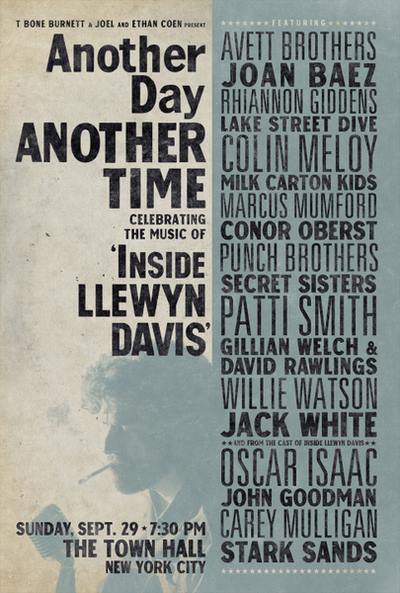


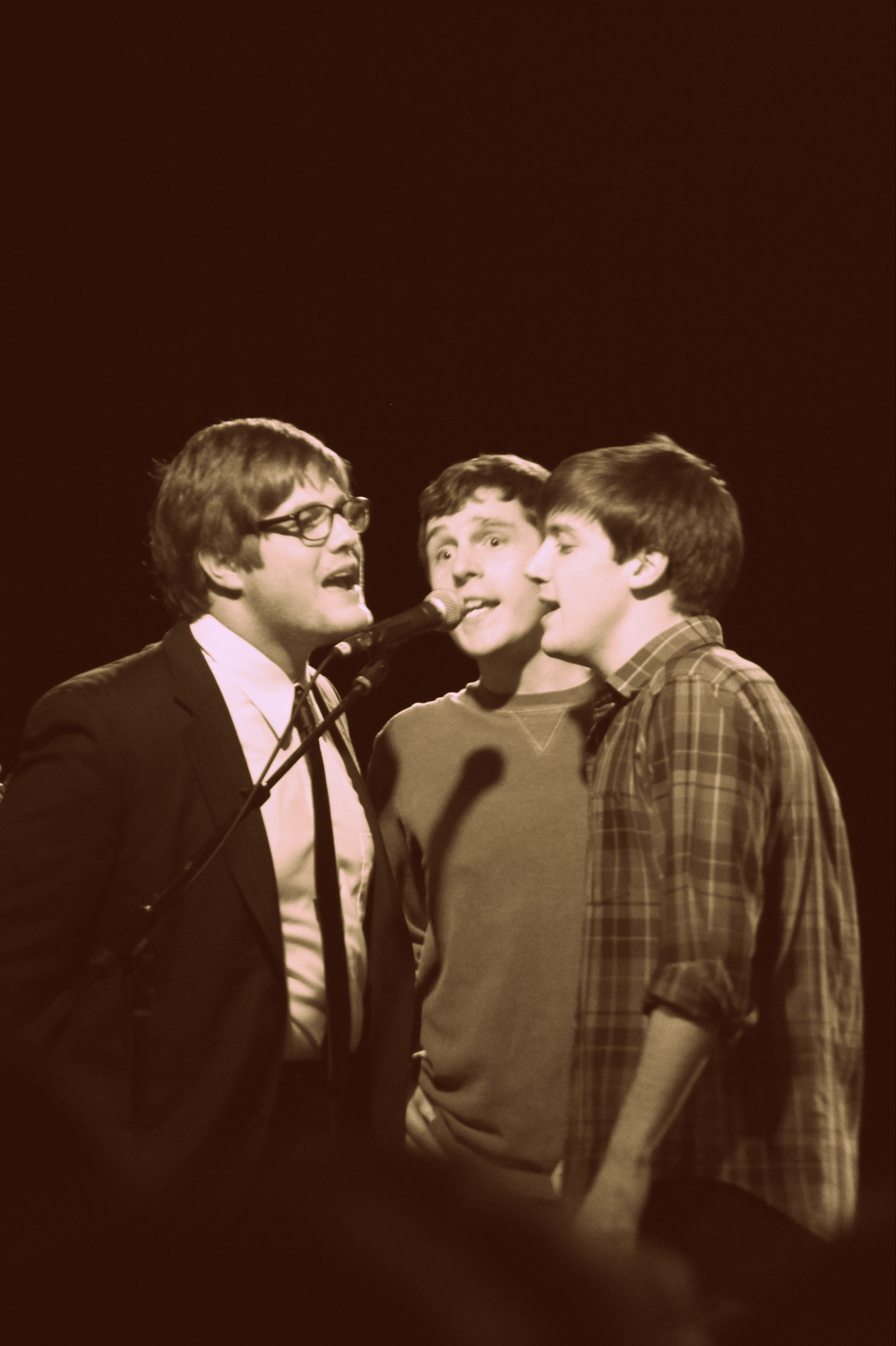


 Evolution of a Fan